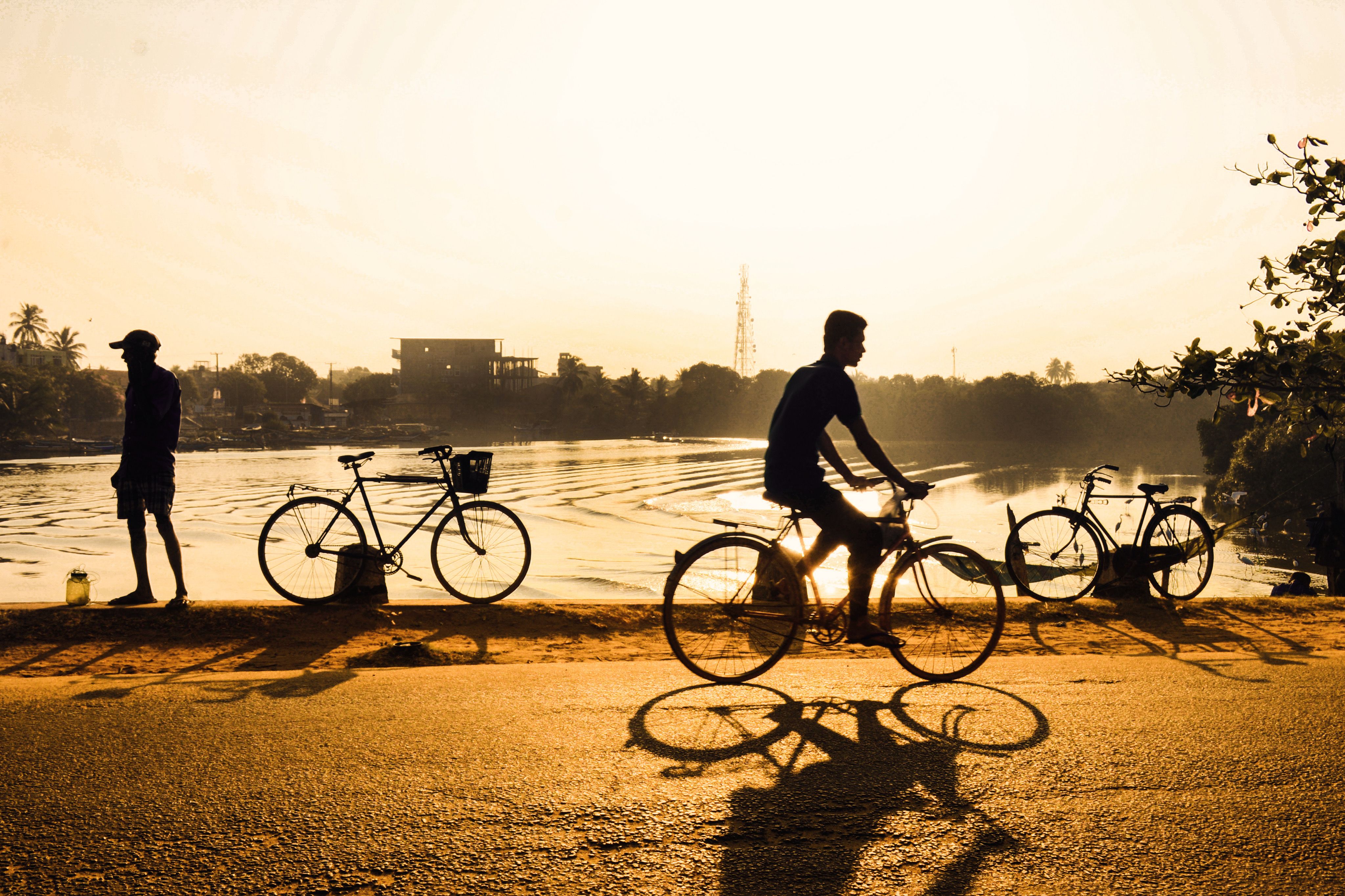
A growing number of travellers want to see this coast at a slower pace than a tuk tuk allows, and cycling genuinely delivers that, paddy fields and palm groves a few metres from your handlebars, the chance to stop wherever something catches your eye, and a kind of access to village life that a vehicle window puts a layer of glass between you and.
It is also, honestly, not without real risk, and this coast's main highway is not built with cyclists in mind. This is the balanced, practical version: what actually works, which roads to avoid, and how to do this safely rather than just enthusiastically.
Is cycling the south coast actually safe?
This needs an honest answer rather than a marketing one. The main coastal highway, the A2, carries fast-moving buses, trucks and tuk tuks, often with limited shoulder space, and is genuinely not a comfortable or especially safe road to cycle on for any real distance, particularly for visitors unfamiliar with local driving patterns.
The back roads, however, are a different story entirely. A dense network of smaller, quieter roads runs parallel to and inland from the main highway across most of this coast, connecting villages, paddy fields and smaller junctions with a fraction of the traffic. This is where good south coast cycling actually happens, not on the A2 itself.
The honest takeaway: cycling short, local stretches on quiet back roads is genuinely enjoyable and reasonably safe. Cycling long distances on the main coastal highway between towns is something we would not recommend, regardless of what a rental shop's marketing might suggest.
Where to rent a bicycle
Most beach towns on this coast have at least one bicycle rental option, often through a guesthouse directly or a small independent shop nearby. Weligama, Ahangama, Mirissa and Galle all have reasonably reliable rental availability, generally simple single-speed or basic geared bikes rather than performance road or mountain bikes.
Check the brakes and tyres carefully before riding off, rental bike maintenance standards vary considerably, and a bike that looked fine parked outside a shop is not always in genuinely good working order.
Good short rides worth doing
Village back roads around Weligama
The network of smaller roads inland from Weligama's main beach road winds through paddy fields, past temples and small family homes, genuinely quiet and genuinely scenic, with almost none of the traffic found on the A2.
Ahangama to Kataluwa Temple
If you have read our guide to the Kataluwa murals, the short ride there from Ahangama runs mostly along quieter roads, a good combination of light exercise and a genuine cultural stop.
Around the Koggala Lake area
The roads near Koggala Lake, away from the main highway, offer a flatter, quieter ride with good birdlife and village scenery, worth combining with a stop at Koggala itself if you have read our guide there.
Galle Fort and the surrounding coastal lanes
Within Galle Fort itself, a bicycle is arguably the best way to see the full ramparts loop and surrounding lanes without the midday heat wearing you down on foot, flat, short, and genuinely pleasant in the early morning or evening.
What about longer, town-to-town rides?
This is where real caution matters. Riding between towns like Galle and Weligama, or Weligama and Mirissa, generally means some unavoidable time on the A2 itself, given how the back road network connects, or does not connect, between these specific towns.
If you are experienced with cycling in traffic-heavy, unfamiliar road conditions and want to attempt a longer coastal ride, do so early morning when traffic is lightest, wear high-visibility clothing, and treat the main highway sections as something to get through quickly and carefully rather than enjoy. If this does not sound like your idea of a good time, it is genuinely fine, and arguably wiser, to stick to short, local rides on quieter back roads instead and use a tuk tuk or bus for the longer town-to-town legs.
When is the best time to cycle?
Early morning, generally before 9am, offers the coolest temperatures, the calmest traffic, and the best light, consistently the best window for cycling anywhere on this coast. Late afternoon into early evening is a reasonable second option, once the worst of the midday heat has passed.
Avoid midday entirely if you can. Heat and humidity make cycling genuinely uncomfortable and more physically demanding than it needs to be, regardless of how flat the terrain is.
What should you bring?
Water, more than you think you need, given how quickly humidity here causes dehydration. Sun protection, since shade is inconsistent on open back roads. A basic repair kit or at least knowledge of the nearest rental shop if you are riding any real distance from where you picked up the bike, punctures and chain issues are a genuine possibility on rental bikes of varying maintenance quality.
A few things I would know before cycling the south coast
Do not attempt to cycle long distances on the A2 highway.
This is genuinely the one firm piece of advice in this whole guide. The main highway is not built with cyclist safety in mind, and the risk is real, not theoretical.
Do not assume a rental bike is in good condition without checking.
Brakes and tyres specifically are worth a proper check before you ride off, rather than discovering an issue a few kilometres from the shop.
Do not cycle at night.
Street lighting is inconsistent to non-existent on many of the back roads that make for good daytime cycling, and visibility to other road users drops sharply after dark.
Do not underestimate the heat.
Even a short ride in the middle of the day can be more physically demanding than cycling the same distance at home. Time your rides for morning or late afternoon.
Is cycling worth doing on the south coast?
Yes, for the right kind of ride. A morning loop through village back roads, a short cultural stop reached by bike instead of tuk tuk, a slow lap of Galle Fort, these are genuinely some of the most enjoyable, low-cost ways to experience this coast at a different pace. Long-distance town-to-town cycling on the main highway is a different proposition entirely, and one we would steer most visitors away from.
Keep it short, keep it on the back roads, and keep it to the cooler hours, and cycling here earns its place easily.
Frequently asked questions about cycling the south coast
Is it safe to cycle on Sri Lanka's south coast?
Short rides on quiet back roads are genuinely safe and enjoyable. Cycling long distances on the main A2 coastal highway is not recommended, given fast-moving traffic and limited shoulder space.
Where can I rent a bicycle on the south coast?
Most beach towns, including Weligama, Ahangama, Mirissa and Galle, have bicycle rental available through guesthouses or small local shops, generally simple single-speed or basic geared bikes.
Can you cycle between Galle and Weligama?
It is possible but involves time on the A2 highway given the back road network does not fully connect these towns. This is only advisable for experienced cyclists comfortable riding in traffic, done early morning with high-visibility clothing.
When is the best time to cycle on the south coast?
Early morning, generally before 9am, offers the coolest temperatures and calmest traffic. Avoid midday heat, and avoid cycling after dark given inconsistent street lighting.
Is cycling in Galle Fort a good idea?
Yes, a bicycle is one of the best ways to cover the full ramparts loop and surrounding lanes, particularly in the cooler hours of early morning or evening.
Final thoughts
This coast rewards a slower pace, and a bicycle on the right road delivers that better than almost anything else, paddy fields close enough to smell, a wave from someone's veranda, the freedom to stop wherever something catches your eye.
Keep it to the back roads, keep it to the cooler hours, and skip the highway entirely. That is the whole formula for doing this well.