Most people walking Galle Fort's ramparts are looking at architecture, the lighthouse, the old cannons, the colonial stonework. At the fort's southern edge, something more alive is usually happening: local boys launching themselves off Flag Rock Bastion into the ocean below, crowds gathering to watch, sea turtles occasionally surfacing in the same stretch of water, and two centuries-old Dutch shipwrecks resting somewhere beneath it all.
If you have read our Galle Fort walking guide, this is the one stop on that walk worth genuinely slowing down for rather than just photographing in passing.
Where is Flag Rock Bastion?
Flag Rock Bastion sits at the most southerly point of Galle Fort's sea-facing ramparts, a short walk from the lighthouse on the Utrecht Bastion. It is built on a naturally occurring rock outcrop, which the Dutch incorporated directly into the fort's defensive wall when the ramparts were constructed in the 1660s, later reinforced by the British after they took the fort in 1796.
The name comes from its original function: a flag post once stood here, used to signal incoming ships whether it was safe to navigate the harbour's notoriously dangerous, partly submerged rocks. You are standing, in other words, on what was once Galle's traffic light.
The famous cliff jumpers
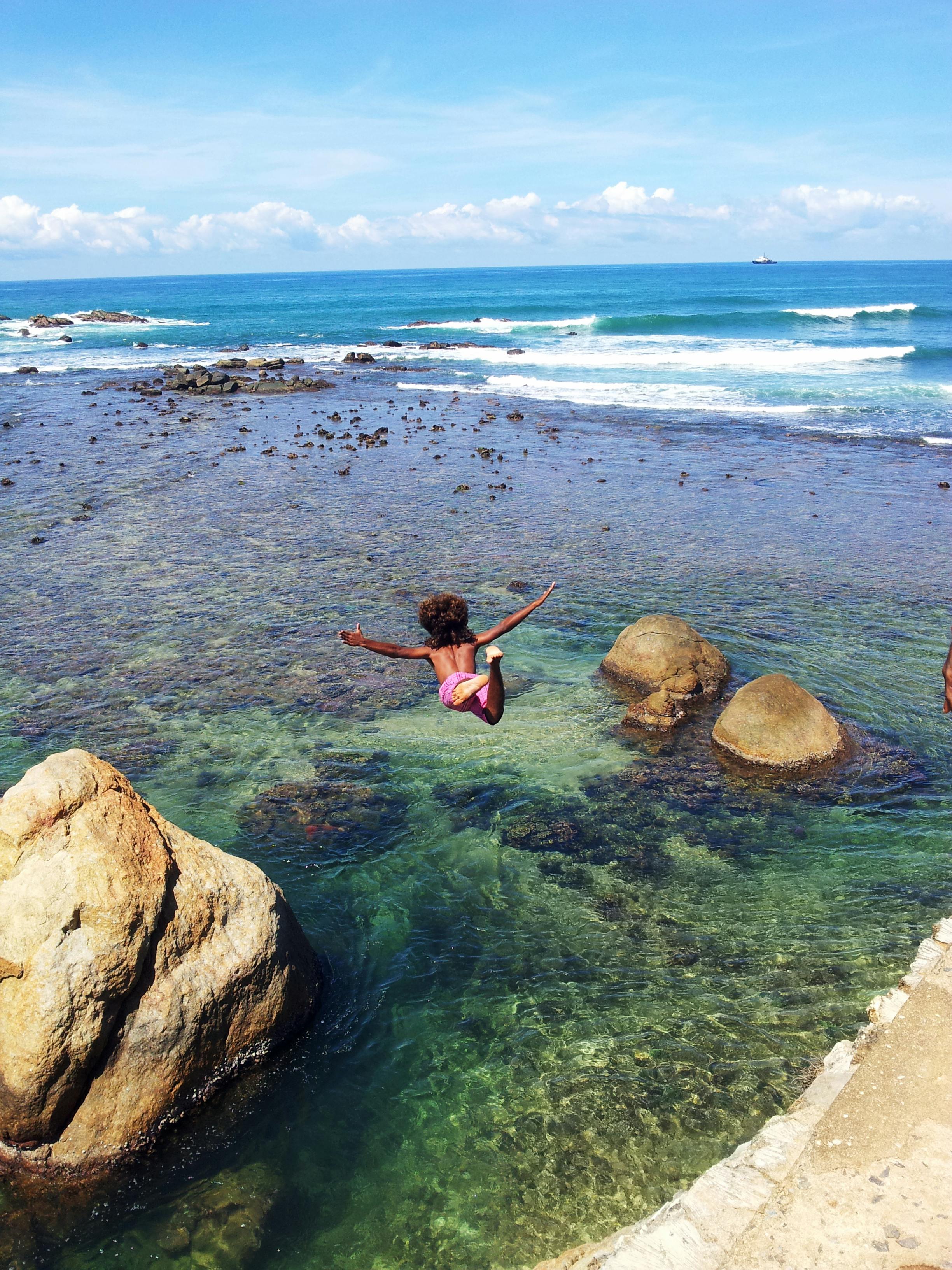
This is what Flag Rock is best known for today. Local boys, generally teenagers and young men from the surrounding area, climb the bastion walls and launch into the ocean below in dramatic freestyle dives, flips, twists, the occasional genuinely alarming trick, performed for an audience that gathers most evenings, particularly around sunset.
This is informal, local entertainment rather than a managed attraction, no schedule, no entry fee, though many visitors tip the divers for a good jump or a requested trick. It has become one of the most reliably entertaining free things to watch in the entire fort.
A clear safety note, since this matters: the water directly around Flag Rock contains genuinely dangerous submerged rocks, part of why the harbour needed a flag signal system in the first place. The local divers who jump here have grown up with intimate, practised knowledge of exactly where it is safe to enter and exactly where it is not. This is not something to attempt yourself without that local knowledge. Watch, tip the divers if you enjoy the show, and leave the actual jumping to people who know this specific stretch of water the way you know your own neighbourhood.
Sea turtles at Flag Rock
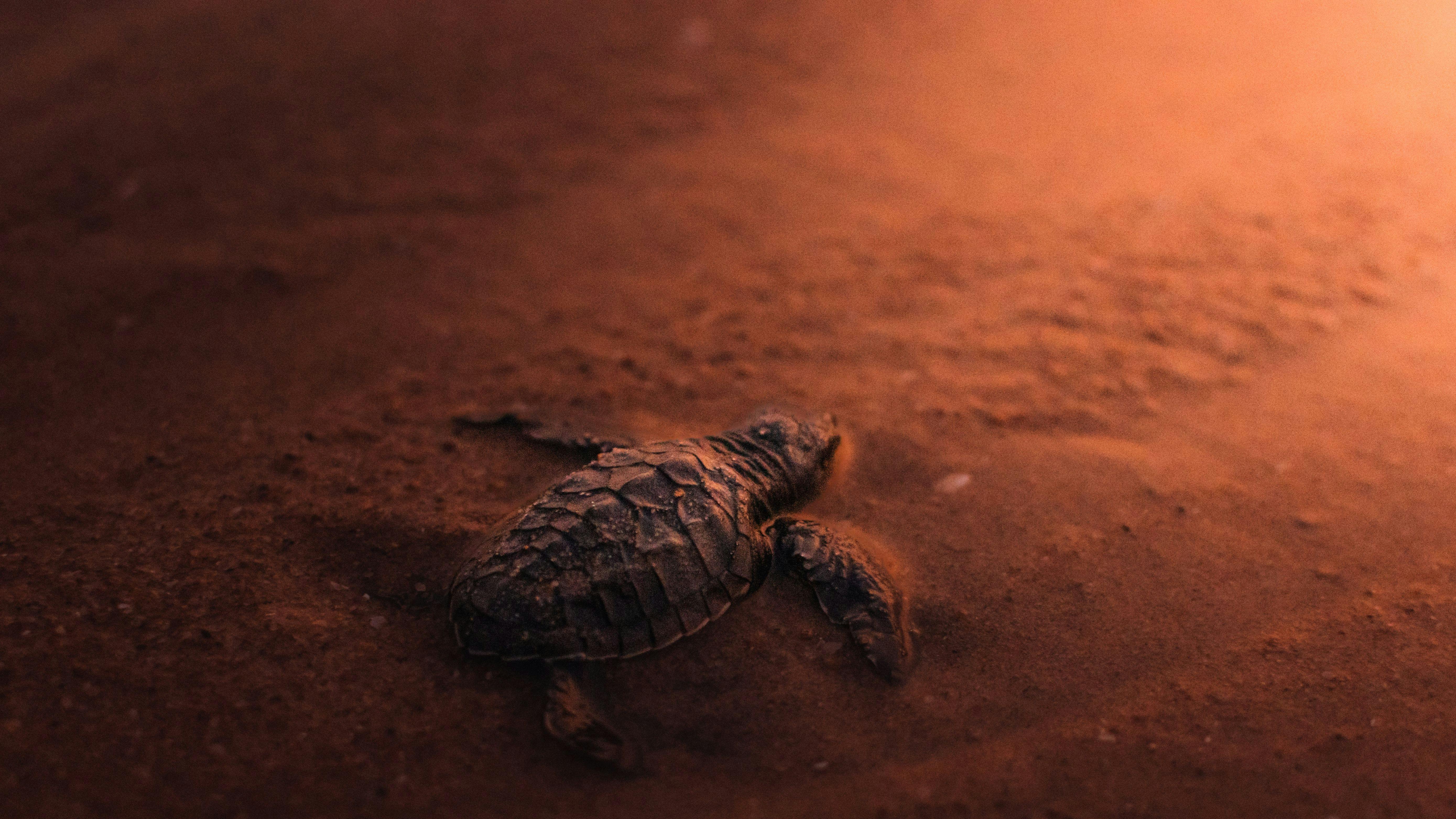
Alongside the divers, Flag Rock is one of the more reliable spots in Galle Fort to see wild sea turtles surfacing in the water below, feeding or simply passing through the harbour approach. Sightings are not guaranteed on any given visit, but it is common enough that regular visitors to the fort know to glance down at the water here rather than only at the ramparts and the horizon.
The shipwrecks beneath Flag Rock
This is the part most visitors never learn. The waters around Galle's harbour approach, including the area near Flag Rock, are the resting place of several historically significant shipwrecks, among them the Avondster, a Dutch East India Company vessel that sank in 1659, and the Hercules, lost in 1661.
Both wrecks have been the subject of genuine underwater archaeological expeditions, and recovered artefacts from these and other wrecks in the harbour are displayed at the Maritime Archaeology Museum, a short walk away within the fort, housed in a building that itself dates to the Dutch period. If Flag Rock's living history, the jumpers, the turtles, catches your attention, the museum fills in the quieter, older story sitting just beneath the surface of the same water.
Why Flag Rock is also the best sunset spot in the fort
Facing directly out over open ocean at the fort's southernmost point, Flag Rock gets some of the clearest, most unobstructed sunset views anywhere along the ramparts. Combined with the divers performing against the colours of the evening sky, it is genuinely one of the more memorable half hours you can spend in Galle without paying for anything.
Arrive 20 to 30 minutes before sunset to find a good spot along the wall, since this is a popular, well-known gathering point by early evening.
How long should you spend at Flag Rock?
Twenty to forty minutes comfortably covers watching a few jumps, scanning the water for turtles, and taking in the view, longer if you arrive for sunset and want to stay through the full show as light fades.
When is the best time to visit?
Late afternoon into evening, particularly the hour before sunset, is when the divers are most active and the crowd atmosphere is at its best. Daytime visits are perfectly pleasant for the views and the chance of a turtle sighting, but the jumping itself is a late-afternoon and evening phenomenon rather than an all-day one.
A few things I would know before visiting Flag Rock
Do not attempt to jump yourself.
The submerged rocks around this exact spot are genuinely hazardous, which is the entire historical reason this location needed a warning flag in the first place. Leave it to the locals who know precisely where it is safe.
Do carry small notes if you want to tip a diver.
This is informal, community-run entertainment, and tips are a normal, appreciated part of how it works, not an obligation, but a welcome gesture if you enjoy the show.
Do not expect a turtle sighting on every visit.
It is common enough to be worth watching for, but nature does not run on a schedule. Treat it as a pleasant possibility rather than a guarantee.
Do visit the Maritime Archaeology Museum if the shipwreck history interests you.
It is a short walk away and gives real depth to what you are standing above at Flag Rock.
Is Flag Rock Bastion worth adding to your Galle Fort visit?
Yes, easily, and if you have already read our Galle Fort walking guide, this is the one stop worth building your timing around rather than just passing through. Daredevil jumpers, wild sea turtles, centuries-old shipwrecks, and one of the best sunsets in the fort, all in the same small stretch of rampart.
Arrive before sunset. Watch the jumpers. Look down for turtles while you're at it.
Frequently asked questions about Flag Rock Bastion
What is Flag Rock Bastion known for?
Flag Rock Bastion, at the southern edge of Galle Fort, is known for local cliff jumpers performing dramatic dives into the ocean, sea turtle sightings, and some of the best sunset views in the fort.
Is it safe to jump off Flag Rock?
No, not for visitors. The water contains genuinely dangerous submerged rocks, the same hazard the bastion was originally built to warn ships about. The local divers who jump here have grown up with detailed, practised knowledge of this specific stretch of water.
Can you see sea turtles at Flag Rock?
Yes, reasonably often, though not guaranteed on every visit. It is one of the more reliable spots within Galle Fort to see wild sea turtles in the harbour waters below.
What shipwrecks are near Flag Rock Bastion?
The Avondster, sunk in 1659, and the Hercules, sunk in 1661, both Dutch East India Company vessels, rest in the waters near Galle's harbour approach, with recovered artefacts displayed at the nearby Maritime Archaeology Museum.
When is the best time to visit Flag Rock Bastion?
Late afternoon into the hour before sunset, when the cliff jumpers are most active and the light is best for photos.
Final thoughts
Most of Galle Fort asks you to imagine its history, walls, cannons, old trading houses standing quiet in the heat. Flag Rock does something different: it hands you a living show, divers testing themselves against water that has swallowed ships for centuries, turtles moving through the same harbour those ships once sailed into.
Stand at the wall. Watch the next jump. Look down, just in case a turtle surfaces while you wait.