Surfing gets most of the attention in Weligama, understandably, but a quieter, growing scene has built up alongside it: freediving, diving on a single breath rather than with tanks, taught by a handful of genuinely well-regarded schools operating out of this exact stretch of coast.
It is a different kind of water activity from anything else covered in our guides, closer to a meditative discipline than an adrenaline sport, and the calm, warm, clear bays around Weligama and Mirissa happen to suit it unusually well.
What is freediving, and how is it different from scuba diving or snorkelling?
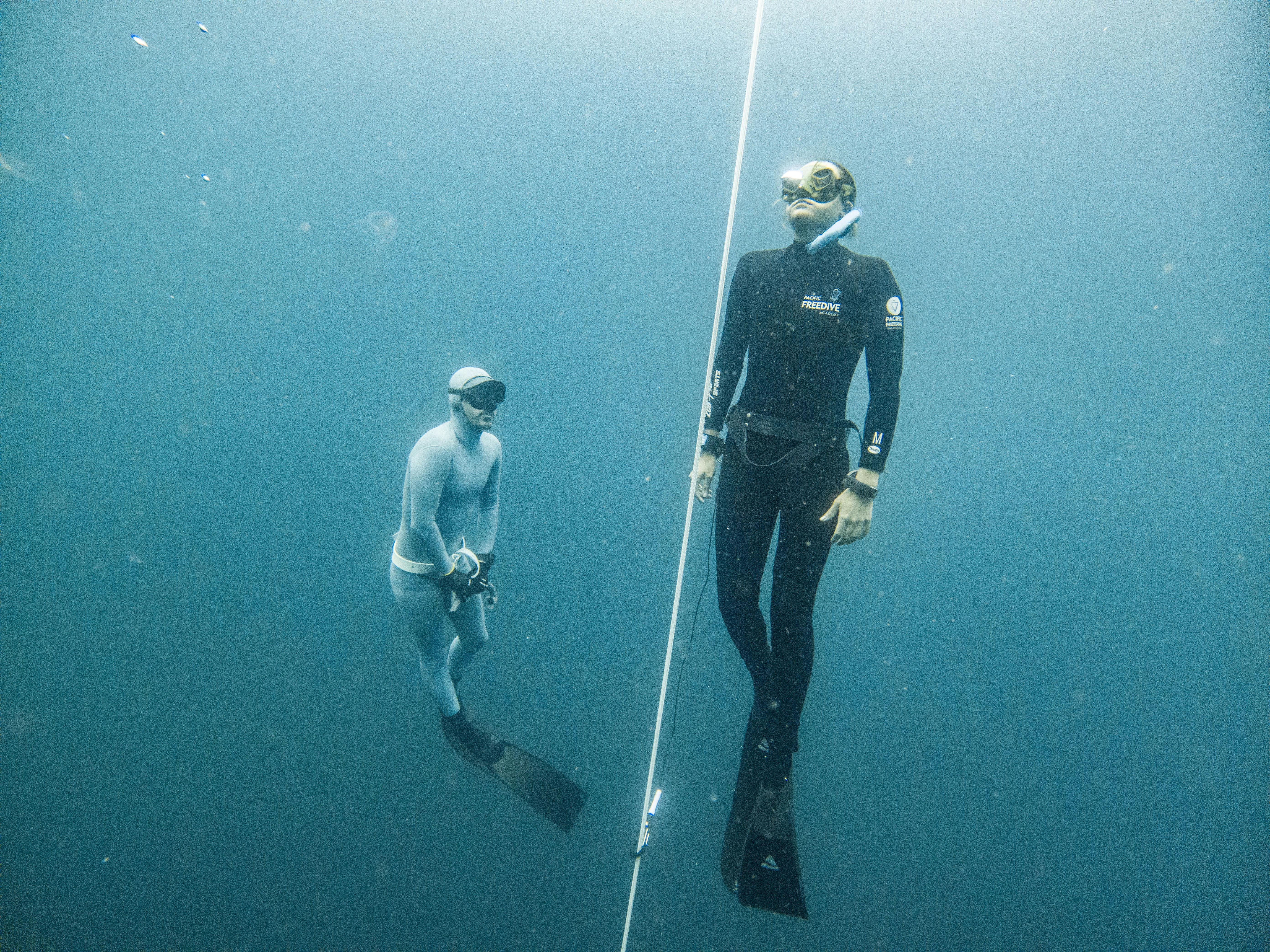
Freediving is the practice of diving underwater on a single breath, without the aid of a scuba tank, using specific breathing, relaxation and equalisation techniques to extend bottom time and reach depth safely. It sits somewhere between snorkelling, which stays at the surface, and scuba diving, which uses compressed air to extend time underwater significantly.
If you have read our scuba diving guide, that activity is built around extended time at depth using equipment. Freediving is built around breath control, technique and a genuinely different relationship with the water, no bubbles, no tank noise, just you, your breath, and a controlled, practised descent.
Why does this stretch of coast suit freediving so well?
A few genuine factors line up here. The bays around Weligama in particular are naturally sheltered and calm, which matters significantly for beginner training, where controlled, still conditions make learning the core skills far easier than open, choppy water would.
Visibility is generally good during the main season, and water temperatures stay warm year-round by most international standards, removing the need for thick wetsuits that can interfere with the controlled breathing and relaxation freediving depends on. The combination of calm water, good visibility and warm temperatures is genuinely hard to find together in many other parts of the world, which is part of why freediving schools have established themselves specifically here.
What does a freediving course actually involve?
Most beginner courses follow a broadly similar structure, built around internationally recognised certification systems like PADI or AIDA.
Theory sessions cover the physiology of breath-holding, the risks involved, safety protocols, and the techniques used for breathing and relaxation before a dive.
Pool or confined water sessions let you practise breath-holding, relaxation and basic technique in controlled, shallow conditions before moving to open water.
Open water training dives take you out into the bay itself, generally along a line, with an instructor directly supervising every dive, building depth and confidence gradually across the course rather than rushing toward a specific number.
A typical beginner course, PADI Freediver level or an equivalent AIDA 1/2 certification, runs across two to three days, and does not require you to be an elite athlete or exceptionally fit going in, proper technique matters far more than raw physical strength for the levels most beginners train to.
How much does a freediving course cost?
Beginner freediving certification courses in this region generally run somewhere in the range of 300 to 400 euros, broadly comparable to an entry-level scuba certification course, though exact pricing varies between schools and depends on group size and specific course inclusions. Confirm current pricing and exactly what is included, theory materials, certification fees, number of open water dives, directly with the specific school before booking.
Is freediving safe?
Freediving carries real, specific risks, primarily related to blackout from extended breath-holding, which is precisely why proper instruction and strict buddy or instructor supervision matter so much, far more here than in many other water activities.
A reputable school will never let you train or dive alone, every open water session is supervised directly, generally one-on-one or in small, closely watched groups, with an instructor positioned to assist immediately if needed. This is not an activity to attempt casually without proper training, and the structured, supervised nature of a proper course is exactly what makes it safe to learn rather than something to figure out independently.
Where to find freediving schools
Established freediving schools operate in the Weligama area specifically, generally run by PADI or AIDA-certified instructors with dedicated training sites in the calmer parts of the bay. Ask at your guesthouse for a current recommendation, or search directly for freediving schools in Weligama, since operators and their specific offerings can shift over time.
When is the best time to freedive on the south coast?
The main season, November through April, offers the calmest water and best visibility, consistent with the broader south coast dry season pattern covered in our weather guide. Outside this window, the southwest monsoon brings rougher conditions less suited to the calm, controlled environment freediving training benefits from.
Freediving or scuba diving: which should you try?
This comes down to what you are actually drawn to rather than one being definitively better.
Choose scuba diving if you want extended time underwater, access to deeper sites and wrecks, and are comfortable with equipment-heavy, technical diving.
Choose freediving if the idea of a quieter, more minimal, breath-held connection with the water appeals to you more than extended bottom time, and you are drawn to the discipline and technique side of the sport as much as the underwater experience itself.
Some divers genuinely do both, and the skills are not mutually exclusive, though each has its own distinct training path and certification system.
A few things I would know before trying freediving
Do not choose a school based purely on price.
Given the real safety considerations involved, proper instruction and supervision matter more here than almost any other water activity on this coast. A slightly higher-priced, well-regarded school is worth it.
Do not eat a heavy meal immediately before training.
Freediving physiology genuinely works better on a lighter stomach, and reputable schools will brief you on this and similar practical preparation before you start.
Do not expect to need elite fitness to begin.
Beginner-level freediving is built around technique and relaxation far more than raw physical strength. Most reasonably healthy adults can learn the fundamentals.
Do not freedive without supervision, ever, even after basic training.
The core safety principle of freediving is never diving alone. This applies after certification just as much as during a course.
Is freediving worth trying on your south coast trip?
Yes, particularly if you are already spending several days in Weligama or Mirissa and want to try something genuinely different from surfing or scuba diving. It is quieter, more introspective, and, with proper instruction, a genuinely accessible skill to begin learning even on a short trip.
Breathe. Relax. Let the water, not the effort, take you down.
Frequently asked questions about freediving on the south coast
Where can I learn to freedive in Sri Lanka?
Established freediving schools operate in the Weligama area on Sri Lanka's south coast, generally run by PADI or AIDA-certified instructors offering beginner through advanced courses.
How much does a freediving course cost in Sri Lanka?
Beginner certification courses generally run in the range of 300 to 400 euros, though exact pricing varies by school, group size and course inclusions.
Is freediving dangerous?
It carries real risks, primarily related to blackout from breath-holding, which is why proper instruction and strict supervision, never diving alone, are essential. A reputable school manages these risks through close, direct supervision at every stage.
How long does a beginner freediving course take?
Most beginner certification courses, such as PADI Freediver or an equivalent AIDA level, run across two to three days, combining theory, pool training and open water dives.
When is the best time to freedive in south Sri Lanka?
November through April offers the calmest water and best visibility, aligned with the broader south coast dry season.
Is freediving the same as scuba diving?
No. Freediving uses no tank or compressed air, relying entirely on breath-holding and technique, while scuba diving uses equipment to extend time underwater significantly. They are distinct disciplines with separate training and certification systems.
Final thoughts
Weligama's bay has built a reputation for beginner surfing, and quietly, it has built a second reputation too, calm enough, warm enough and clear enough to teach people how to hold their breath and go somewhere surfing never takes you.
No tank, no bubbles, just the water and however far your training and your breath will take you that day.