A pola is a weekly open-air produce market, and nearly every town on the south coast has one, running on the same day each week, largely unchanged in how it operates for generations. Almost no visitor ever goes, not because they are hidden, but because nothing points travellers toward them the way it points them toward a beach or a temple.
That is a shame, because a pola is one of the more honest windows into daily life on this coast, fruit, vegetables, fish, spices and household goods laid out by vendors who have often worked the same stall for years, with almost no concession to tourism at all.
If you are wondering what a pola actually is, which towns have one, and how to visit respectfully, this guide should help.
What is a pola?
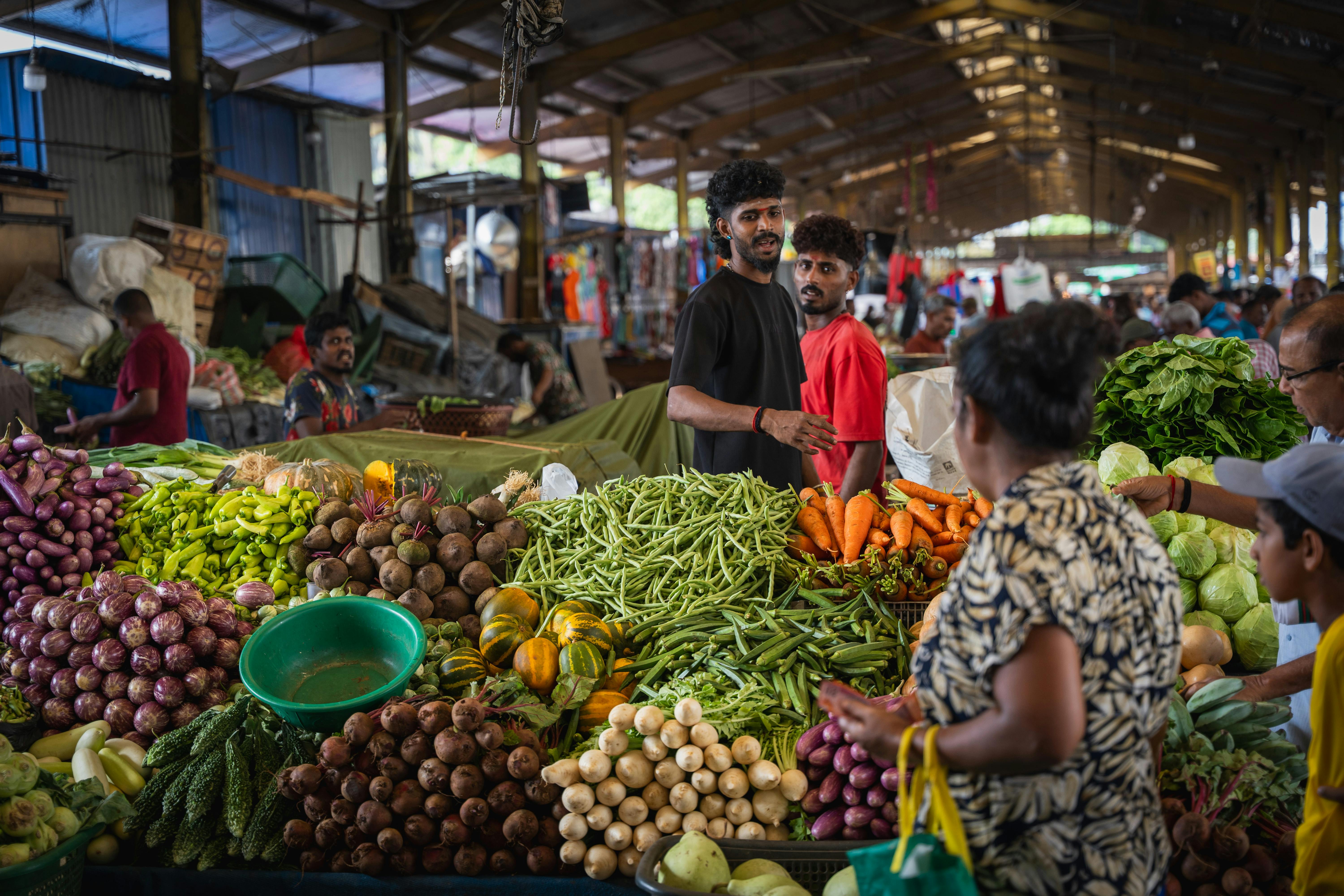
Pola is the Sinhala word for a weekly open-air market, held on a fixed day in towns across Sri Lanka, where local farmers, fishermen and small traders sell directly to the public. Unlike a daily town market or a supermarket, a pola runs once a week, drawing sellers from the surrounding villages who set up temporary stalls, often just a tarpaulin and a table, for that single day.
Prices are generally lower than at daily shops, since you are buying closer to the source, and the range of produce reflects exactly what is in season locally that week rather than a curated year-round selection.
Why visit a pola as a traveller?
A pola gives you a genuinely unfiltered look at local daily life, in a way a beach, a temple or even a restaurant meal does not. You see what people actually eat, what is in season, how prices are negotiated, and the rhythm of a town on its one dedicated market day each week.
It is also useful in a practical sense if you are self-catering, staying somewhere with a kitchen, or simply want to try fruit and vegetables you may not recognise from home, at prices well below what a tourist-facing shop would charge.
Pola market days on the south coast
Market days vary by town and can shift occasionally, so treat these as a starting point to confirm locally rather than a fixed schedule carved in stone.
Galle
Galle's main pola is generally held on Sundays, drawing sellers from across the surrounding area into a market area a short distance from the fort. It is one of the larger and more established markets on this stretch of coast.
Matara
Matara has a well-known daily fish market near the old town, alongside a broader weekly pola for general produce. If you have read our Matara guide, you already know the fish market sits close to the Star Fort and river mouth area, worth combining into the same visit.
Weligama
Weligama's pola typically runs on a specific day each week, smaller in scale than Galle's but genuinely local, mostly serving residents rather than any tourist trade.
Confirming exact days
Because market days can occasionally shift or vary by source, the most reliable way to confirm the current day for any specific town is to ask your guesthouse host directly, they will know the current schedule far more precisely than any fixed list, since these things do occasionally change.
What can you actually buy at a pola?
Fresh fruit and vegetables make up the bulk of most polas, king coconut, mangoes, papaya, jackfruit and pineapple depending on the season, alongside everyday vegetables like beans, brinjal, pumpkin and leafy greens.
Spices are commonly sold loose or in small packets, cinnamon, chilli, turmeric and curry powder blends among them, often at a fraction of what a tourist-oriented spice shop would charge for the same thing. Fish markets, where present, sell the day's catch directly, and household goods, clothing and small hardware items round out a typical pola alongside the food stalls.
How to visit a pola respectfully
A pola is a working market serving local residents, not a tourist attraction, and a few small habits go a long way.
Go early. Most polas are busiest and best-stocked in the morning, with vendors and produce both thinning out noticeably by midday.
Bring small cash. Vendors generally cannot break large notes, and small denominations make transactions smoother for everyone.
Ask before photographing people directly. Photographing the produce and general market scene is generally fine, but ask first if you want a photo of a specific vendor, the same courtesy you would extend anywhere else.
Do not aggressively bargain over small amounts. Prices at a pola are already considerably lower than tourist-facing shops, and haggling hard over what amounts to a few rupees matters more to the vendor than it does to you.
Bring your own bag. Most vendors do not provide bags the way a supermarket would, and bringing your own is both practical and considerate.
How long should you spend at a pola?
Thirty minutes to an hour is enough to properly walk through a town's pola, longer if you are actually shopping for a self-catering stay or simply enjoy taking your time.
This works well as an early morning stop before the rest of your day's plans, particularly if you are already staying in or near the town on its specific market day.
A few things I would know before visiting a pola
Do not expect English to be widely spoken.
Most vendors serve a local customer base, and a smile, patience and pointing generally get you further than English will. This is part of the genuine, unfiltered character of the experience.
Do not go expecting a curated tourist experience.
There are no signs, no set paths and no concessions made for visitors. That is precisely what makes it worth visiting.
Do not assume the market day is fixed forever.
Confirm the current schedule locally, since these things can shift occasionally even in long-established markets.
Is visiting a pola worth adding to your south coast trip?
Yes, particularly if you want a genuine, unstaged glimpse of daily life on this coast, or if you are self-catering and want fresh produce at real local prices.
It costs you very little time and almost nothing in money, and it shows you a side of these towns that no beach, fort or temple visit can.
Go early.
Bring small notes and an open mind about what you might find.
Frequently asked questions about south coast pola markets
What is a pola in Sri Lanka?
A pola is a weekly open-air produce market held on a fixed day in towns across Sri Lanka, where local farmers, fishermen and small traders sell fresh produce, fish, spices and household goods directly to the public.
What day is the pola in Galle?
Galle's main pola is generally held on Sundays, though it is worth confirming locally, since schedules can occasionally shift.
Is there a fish market in Matara?
Yes, Matara has a well-known daily fish market near the old town and Star Fort area, alongside a broader weekly pola for general produce.
Can tourists visit a pola market?
Yes. Polas are open to the public and welcoming to visitors, though they are working markets for local residents rather than tourist attractions, so visiting respectfully, going early, bringing small cash, matters.
What should I buy at a south coast pola?
Fresh fruit and vegetables, loose spices, and, where available, the day's fish catch are the main draws, generally at noticeably lower prices than tourist-facing shops.
Final thoughts
A pola will not appear on most south coast itineraries, and it is easy to see why, there is no entry fee, no view, no obvious photo opportunity waiting at the entrance. What there is instead is a town on its one working market day, exactly as it has run for generations, largely indifferent to whether anyone from outside shows up to see it.
Go early. Bring small notes.
You will leave with more than you expected, and probably some fruit you have never tried before.