A surprising number of people assume you need a private driver or a rental car to properly see Sri Lanka's south coast. You do not. The coastal train and bus network covers this entire stretch of coast reasonably well, tuk tuks fill in the gaps for shorter local hops, and ride-hailing apps work in most of the bigger towns now. Plenty of travellers cover the whole coast this way, at a fraction of the cost of a private vehicle.
If you are wondering whether skipping a car or driver is realistic, what the actual options look like, and where the limits are, this guide should help.
Is it realistic to do south Sri Lanka without a car?
Yes, for the main coastal towns, Galle, Unawatuna, Weligama, Mirissa, Ahangama, Hiriketiya, Tangalle and Matara all sit along or close to the coastal railway line and main bus routes, and moving between them without a private vehicle is entirely normal, not a hardship version of the trip.
Where it gets more complicated is reaching inland stops, Yala, Udawalawe, Kanneliya, Kataragama, Mulkirigala, which sit away from the coastal transport corridor and generally require a hired tuk tuk, a day tour, or a private driver for that specific leg, even if the rest of your trip is car-free.
The coastal train: your main tool
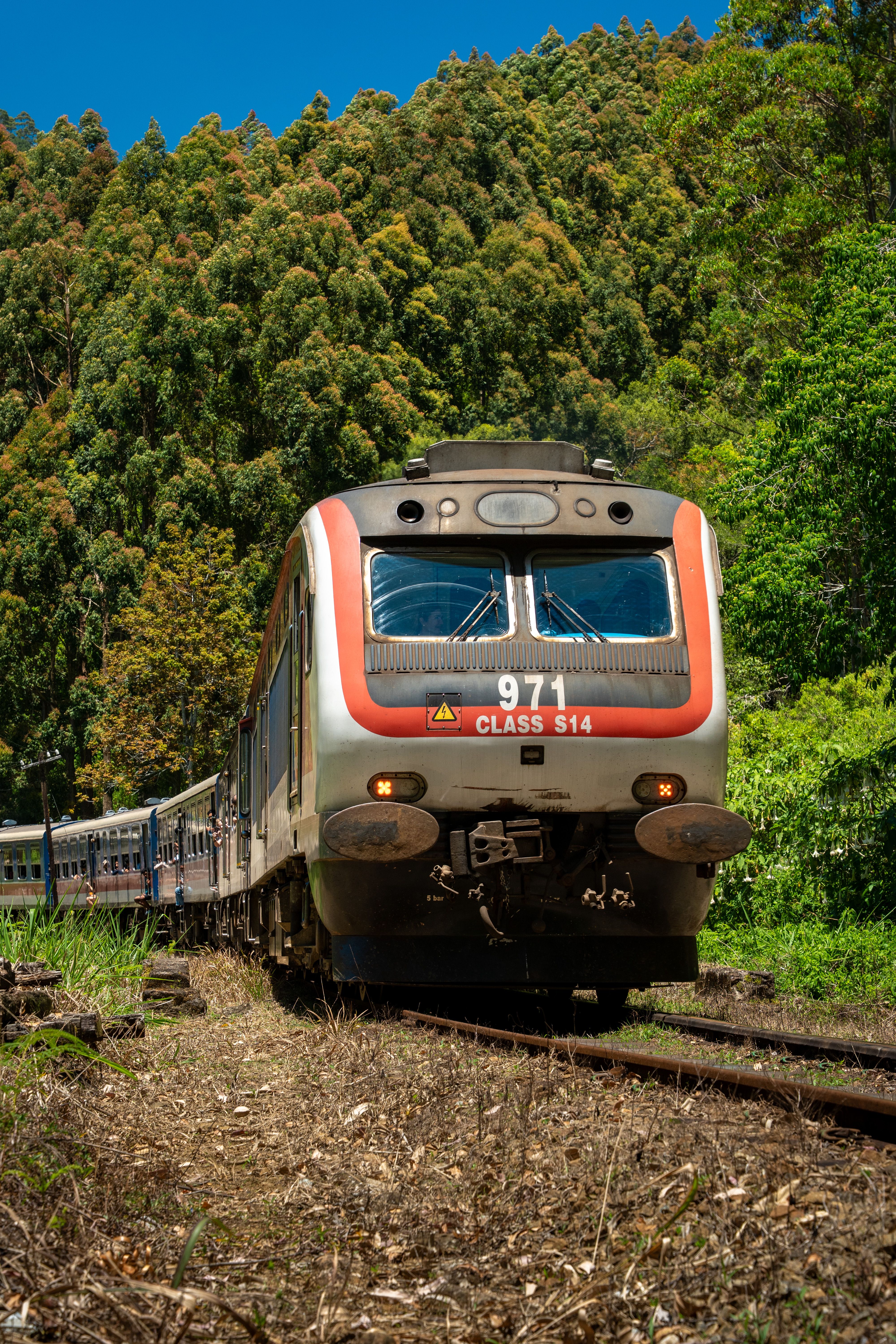
The Colombo to Matara coastal railway line is the backbone of car-free travel on this coast, running close to the shoreline for long stretches and stopping at or near most of the towns you are likely to visit, Galle, Ahangama, Weligama, Matara, with Colombo at one end.
Trains are cheap, genuinely scenic, and a good way to cover longer distances along the coast in one go. The trade-off is that they can run late, get crowded during peak times, and do not stop directly in every single town, Mirissa and Tangalle in particular sit a short tuk tuk ride from their nearest stations rather than having a station of their own right in town.
Book or check timings a little in advance for longer journeys, particularly around Colombo, and do not schedule a train tightly against an onward flight or transfer.
Buses: cheaper, more flexible, less comfortable
Buses run frequently along the main coastal highway connecting every town on this list, generally more often than trains and covering a few more direct stops. They are the cheapest way to move along the coast by a wide margin.
Comfort varies significantly. Local buses can be crowded, hot and driven with more enthusiasm than caution, while intercity or semi-luxury buses on the main routes offer air conditioning and assigned seating for a bit more money. For shorter hops between neighbouring towns, Galle to Ahangama, Weligama to Mirissa, buses are genuinely easy and reliable.
Tuk tuks: for the gaps trains and buses do not cover
Tuk tuks are how you handle the last mile, from a train station to your guesthouse, from Mirissa's or Tangalle's town centre out to a specific beach or restaurant, or for a half or full day hired specifically for local sightseeing around one town.
Agree on the fare before getting in, since most tuk tuks here do not run on a meter. A short hop within a town generally costs a few hundred rupees, while hiring a tuk tuk and driver for several hours or a full day, covering multiple stops, typically runs into the low thousands depending on distance and negotiation.
Ride-hailing apps: increasingly reliable in the bigger towns
Ride-hailing apps work reasonably well in Galle and are increasingly available in some of the other larger coastal towns, offering a more predictable, pre-agreed fare than negotiating directly with a driver on the street. Coverage and reliability thin out the further you get from the bigger towns, so do not assume an app will always be your fastest or most available option everywhere on the coast.
Hired tuk tuks and day tours for inland stops
This is the one place where "no car" does not mean "no vehicle at all." Yala, Udawalawe, Kanneliya, Kataragama and Mulkirigala all sit inland or away from the main coastal transport corridor, and reaching them without a private vehicle for that specific leg is genuinely impractical.
The realistic approach most car-free travellers take is hiring a tuk tuk and driver, or booking a day tour, specifically for that one excursion, rather than needing a vehicle for the whole trip. A Yala safari, for example, is almost always arranged as a package including transport from your accommodation, regardless of how you have been getting around the rest of the coast.
A sample route, entirely without a car
Galle to Ahangama: bus or train, both easy and frequent.
Ahangama to Weligama: bus or tuk tuk, a short, simple hop.
Weligama to Mirissa: tuk tuk, since neither has direct train coverage between them and the distance is short.
Mirissa to Matara: train or bus, both straightforward.
Matara to Tangalle: bus, since Tangalle sits off the train line.
A Yala or Udawalawe safari from Tangalle: hired tuk tuk or a booked safari package with transport included, arranged as a single day excursion rather than requiring a vehicle for the wider trip.
This covers the core of the south coast plus a safari day, entirely without renting a car or hiring a driver for the full trip.
When does hiring a driver actually make sense?
If you are trying to cover a lot of ground in a short amount of time, want to move at your own schedule rather than around bus and train timetables, or are travelling with a group where splitting a driver's cost makes it comparable to public transport per person, a private driver genuinely earns its cost. It is not necessary, but it is not a waste either, depending on your priorities.
Most car-free travellers on this coast are backpackers, solo travellers, or couples prioritising cost and a bit of adventure over pure convenience, and the tradeoffs generally suit that kind of trip well.
How much time should you build in for transport if you skip a car?
More than you would with a private vehicle, but not dramatically more for the core coastal route. Budget roughly an extra 20 to 30 minutes of buffer per leg compared to a direct private transfer, to account for waiting, transfers, and the occasional delay, particularly with trains.
For inland day trips like Yala, treat the whole day as dedicated to that excursion rather than trying to combine it with much else, regardless of how you are getting there.
A few things I would know before doing this route without a car
Do not schedule a train tightly against a flight or an important onward connection.
Delays happen, particularly on longer routes and around Colombo. Build in buffer time for anything time-sensitive.
Do not assume every town has its own train station.
Mirissa and Tangalle in particular require a short tuk tuk ride from the nearest station, factor that into your timing.
Do not try to reach Yala or similar inland sites without arranging transport for that specific leg.
This is the one place where "no car" genuinely means "hire a vehicle just for this," rather than relying on trains and buses.
Is doing south Sri Lanka without a car worth it?
Yes, for most travellers covering the core coastal towns. It costs meaningfully less than a private driver for the whole trip, forces a bit more spontaneity and local interaction than a sealed private vehicle does, and genuinely does not require much more planning than booking a car would.
The only real exception is inland safari and cultural sites, where hiring a vehicle for that one leg specifically is simply part of doing the trip properly, car-free or not.
Frequently asked questions about travelling south Sri Lanka without a car
Can you see south Sri Lanka without renting a car?
Yes. The coastal train and bus network covers the main towns, Galle, Ahangama, Weligama, Mirissa, Matara and Tangalle, well, with tuk tuks filling in local gaps and last-mile connections.
How do you get to Yala without a car?
Yala requires hiring a tuk tuk and driver or booking a safari tour with transport included for that specific day, since it sits inland away from the coastal train and bus corridor.
Is the coastal train a good way to get around south Sri Lanka?
Yes, it is cheap, scenic, and covers most of the main coastal towns, though it can run late and does not stop directly in every town, Mirissa and Tangalle require a short tuk tuk ride from the nearest station.
Do tuk tuks run on a meter in south Sri Lanka?
Generally no. Agree on the fare before getting in, whether for a short hop or a longer hired trip.
Is it cheaper to travel south Sri Lanka without a car?
Yes, significantly. Trains, buses and tuk tuks together cost a fraction of hiring a private driver or car for the full duration of a trip.
Final thoughts
You do not need a rental car or a private driver to properly see this coast. The train runs along the water, the buses run often, and a tuk tuk is never far away when you need one.
Build in a little extra time, hire a vehicle specifically for the one or two inland trips that need it, and the rest of the coast is genuinely easy to cover on your own terms.