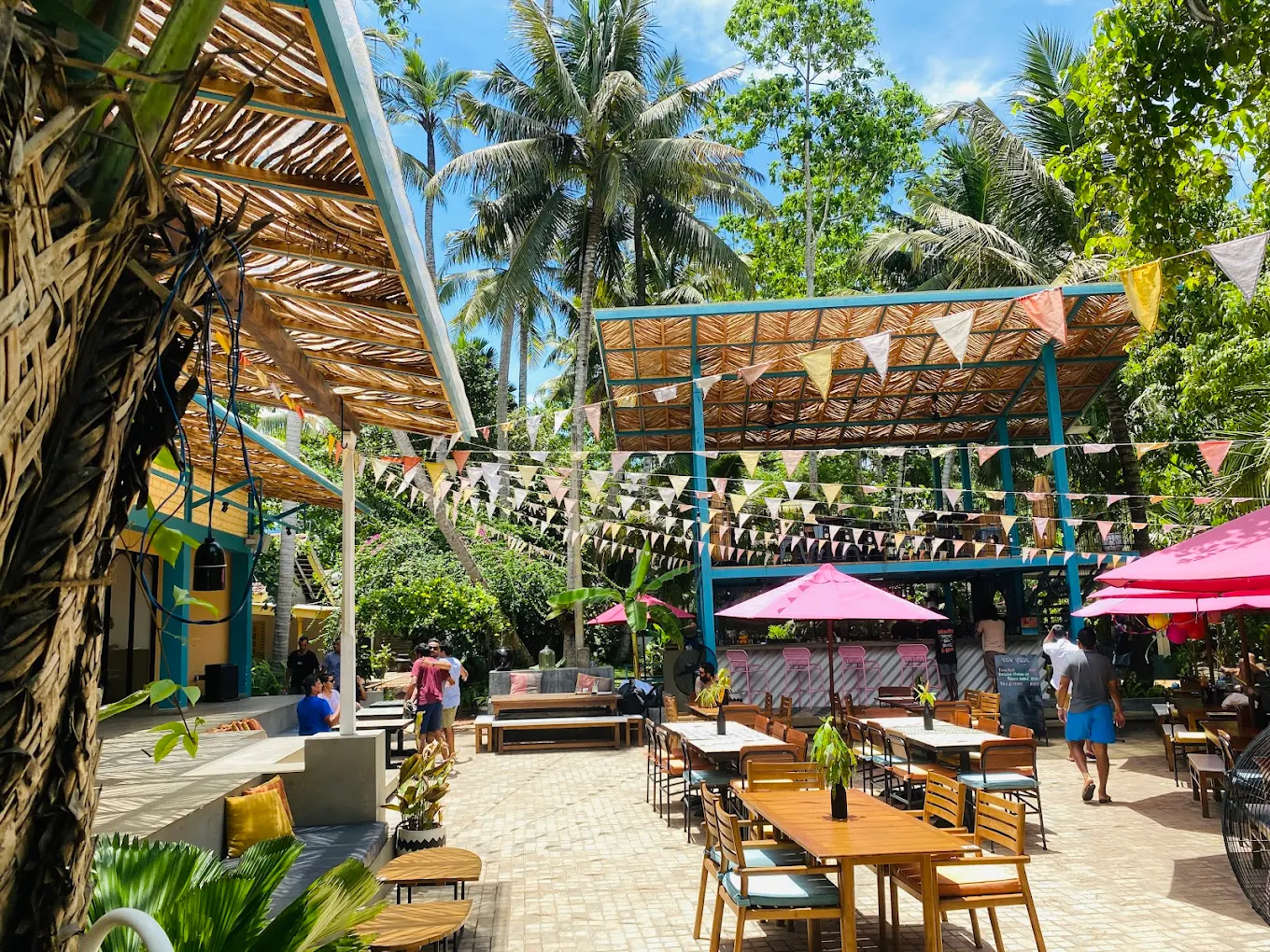

Nobody hands you a rulebook when you land. There is no orientation, no welcome pack, just a string of small moments where you realise, often a beat too late, that everyone around you already understood something you did not.
Most of these are not written down anywhere. They are the things locals absorb without noticing, and the things visitors piece together, usually the hard way, somewhere around day four. Here they are in one place, so you do not have to learn all of them the slow way.
1. The price someone quotes first is never the real price, but that is not the same as being scammed
A tuk tuk driver, a souvenir seller, sometimes even a guesthouse with no fixed rate, will often open with a higher number than they expect to receive. This is not necessarily dishonesty. It is simply how price negotiation works here. Counter reasonably, expect to land somewhere in the middle, and do not take the opening number personally.
2. "Nearby" is a feeling, not a distance
Ask a local how far something is and you will often get "nearby" or "just there" regardless of whether it is five minutes or forty. Distance here is measured more by ease and familiarity than by kilometres. Always ask how long it actually takes, in minutes, by whatever mode you are using.
3. A head wobble is not a no, and it is usually not quite a yes either
The side-to-side head movement common across South Asia shows up constantly on this coast, and it can mean agreement, acknowledgement, or simply "I am listening," depending entirely on context. Do not assume it settles anything. If something needs to be certain, confirm it in words.
4. Sunday mornings move differently
Many local shops, especially smaller family-run ones, open later or stay closed longer on Sunday mornings, particularly in more residential areas away from the main tourist strips. If you need something specific early on a Sunday, do not assume it will be as available as it was the day before.
5. Bargaining hard over small amounts costs you more than it saves you
The difference between what a vendor asks and what feels fair is often the equivalent of a few cents to you, and a meaningful amount to them. Negotiate where it matters, a tuk tuk fare, an unmetered activity price, but do not turn a fifty rupee difference over a coconut into a matter of principle.
6. The best food rarely has a sign
Some of the best meals on this coast come from places with no menu, no sign, and no online presence at all, a house that sells rice and curry out the front for a couple of hours each day, a stall that only appears in the evening. Ask locals where they actually eat, not where they recommend for tourists specifically.
7. Removing your shoes is not optional at a temple, even for "just a quick look"
Every temple, however briefly you intend to stay, expects shoes off and shoulders and knees covered. There is no five-minute exception. If you are not dressed appropriately, either come back later properly dressed or skip it entirely rather than testing the boundary.
8. Tuk tuk drivers know more than the app does
Ride-hailing apps work reasonably well in the bigger towns, but a driver who actually knows the area will often get you there faster, know a shortcut the app does not, or warn you about something ahead the app cannot see. Do not dismiss a driver's local knowledge just because the app shows a different route.
9. The sea looking calm does not mean it is calm
More than one visitor has learned this the hard way. Currents on several south coast beaches can be genuinely dangerous even when the surface looks gentle, particularly outside the main dry season. Ask locally before swimming somewhere unfamiliar, every time, not just once.
10. Power cuts happen, and nobody treats them as an emergency
Brief, unannounced power interruptions are simply part of life here, generally resolved within minutes to an hour. Locals barely react to them. If the lights go out at your guesthouse, wait it out rather than assuming something has gone seriously wrong.
11. A closed door does not always mean closed
Many small shops and family businesses keep flexible hours built around actual demand rather than a fixed schedule. A shuttered-looking shop in the early afternoon might simply mean the owner stepped out, and knocking or calling out is often worth trying before assuming it is closed for the day.
12. Everyone will ask where you are from, and it is genuine curiosity, not small talk to fill silence
This is one of the most consistent things visitors notice. It is not a scripted opener before a sales pitch, most of the time it is simply real interest in who you are and where you have come from. Answering warmly tends to open doors, not just conversation.
13. The quiet beaches are quiet for a reason, and it is not always a bad one
Some beaches are empty because access is harder, some because the sand is rockier, some simply because they have not been discovered by the wider tourist circuit yet. Quiet does not automatically mean better, but it rarely means worse either. Ask why before assuming.
14. Rice and curry is not one dish, it is an entire daily ritual
Ordering "rice and curry" gets you a plate with multiple small curries, sambols and accompaniments, and the exact combination changes by region, season and even the specific cook. Do not expect consistency between two places serving the "same" dish. That variety is the point.
15. Nobody is actually in a hurry, and pretending otherwise stresses everyone out
Things here generally happen at their own pace, a meal, a repair, a booking confirmation. Visitors who arrive expecting the speed of home tend to have a harder time than those who simply accept the different rhythm and plan around it.
A few more small ones worth knowing
Always carry small notes. Breaking a large bill is a genuine inconvenience for smaller vendors, tuk tuk drivers and market stalls.
"Five minutes" from a tuk tuk driver waiting for you can mean fifteen. Build in a little slack rather than watching the clock.
Locals will often walk you somewhere rather than just point. If you ask for directions, do not be surprised if someone simply leads you there themselves. Accepting graciously is the right response.
A genuine thank you in Sinhala, "istuti," goes further than you would expect. Even a small, clumsy effort at the local language is noticed and appreciated.
Is any of this really "official"?
No, and that is exactly the point. None of this is written on a sign or explained in a guidebook footnote. It is simply what gets absorbed by anyone who spends enough time here, the small, unspoken logic behind how the south coast actually works, day to day.
Knowing it in advance will not make your trip perfect. But it will save you a few confused moments, a little frustration, and, occasionally, a genuinely dangerous mistake with the sea.
Frequently asked questions about south Sri Lanka etiquette
Is it rude to bargain in south Sri Lanka?
No, bargaining is a normal and expected part of many transactions, particularly tuk tuk fares and unmetered purchases. It becomes uncomfortable only when pushed aggressively over very small amounts that matter more to the vendor than to you.
What does the head wobble mean in Sri Lanka?
It can indicate agreement, acknowledgement, or simply that someone is listening, depending on context. It is not a reliable substitute for a clear verbal yes or no when certainty actually matters.
Do shops close on Sundays in south Sri Lanka?
Many smaller, family-run shops open later or keep reduced hours on Sunday mornings, particularly away from the main tourist areas, though this varies by town and business.
Is it safe to swim anywhere on the south coast?
No. Conditions vary significantly by beach and season, and calm-looking water can still carry dangerous currents. Always ask locally before swimming somewhere unfamiliar.
Why do south coast beaches vary so much between busy and empty?
Access, sand quality, and how established a beach is within the wider tourist circuit all play a role. An empty beach is not automatically worse, and a busy one is not automatically better.
Final thoughts
None of this is written down anywhere official, because it does not need to be. It is simply how the south coast works, absorbed slowly by anyone who spends real time here, and usually learned the hard way by anyone who does not.
Come with a little patience, ask before you assume, and let the pace of the place set the pace of your trip rather than the other way around.