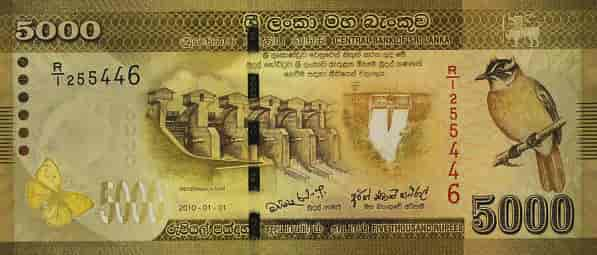
Ten thousand rupees sounds like a lot of money the first time you see it on a menu or a price tag, and then you convert it and realise it is somewhere around 30 to 35 US dollars, and suddenly the number stops meaning anything useful at all. Most currency guides stop at the exchange rate and leave you to do the mental math every single time.
This is the version that skips the conversion and just shows you what 10,000 rupees actually buys, across food, transport, a night's stay, and a few of the activities most visitors end up paying for on this coast. Prices shift a little by season and by exactly where you are, but this gives you a genuinely useful sense of scale.
What 10,000 rupees actually is
At current rates, 10,000 Sri Lankan rupees works out to roughly 30 to 35 US dollars, or a similar range in euros or pounds depending on the day's exchange rate. It is a useful benchmark specifically because it sits right in the middle of a lot of everyday spending decisions on this coast, not so small it only covers a coffee, not so large it covers a whole day.
What 10,000 rupees gets you in food
A full day of eating, if you keep it local. A local rice and curry meal generally runs somewhere between 300 and 600 rupees. Breakfast, lunch and dinner at local spots, plus a couple of coconuts or short eats along the way, comfortably fits within 10,000 rupees with room to spare.
Two to three meals at a tourist-facing beachfront restaurant. A single meal with a drink at a nicer beach restaurant in Mirissa, Weligama or Unawatuna can easily run 2,500 to 4,000 rupees per person, so 10,000 rupees covers two to three such meals rather than a full day of eating at that level.
A proper seafood dinner for two, at a mid-range spot. Fresh catch, a couple of sides and drinks for two people at a solid, non-beachfront-premium restaurant generally lands within or close to this budget.
What 10,000 rupees gets you in transport
A private tuk tuk for most of a day. Hiring a tuk tuk and driver for several hours, covering multiple stops around one town or a short day trip, typically costs somewhere in this range, sometimes a little more depending on distance and negotiation.
A one-way private taxi between two south coast towns. A taxi from Galle to Mirissa or Weligama to Tangalle, for example, often falls within or close to this budget, cheaper than a longer Colombo transfer but more than a shared bus or train.
A full week of local buses and trains, if you use them properly. Public transport on this coast is genuinely cheap. A week of coastal train and bus travel between towns can cost a fraction of 10,000 rupees, leaving room for other spending entirely.
What 10,000 rupees gets you in accommodation
One night in a solid mid-range guesthouse double room, generally with air conditioning, hot water and a decent location, though not right on the beachfront at peak season pricing.
Two nights in a simple budget guesthouse, fan-cooled, basic but clean, the kind of place backpackers and budget travellers rely on throughout the south coast.
A fraction of one night at a higher-end beachfront property, where a single night can run well beyond this budget on its own, particularly during December and January peak season.
What 10,000 rupees gets you in activities
A two hour beginner surf lesson in Weligama, board included, generally falls within this range, sometimes slightly under.
A shared whale watching tour in Mirissa, for one person, typically costs somewhere close to or within this budget depending on the operator and season, worth checking our whale watching guide for how to pick a good one.
Entry to a couple of mid-tier attractions, rather than one major site. Sri Lanka's biggest attractions, Yala safaris, major cultural sites, tend to cost more individually, so 10,000 rupees stretches further across two or three smaller stops, a mask museum, a tea estate tour, a snorkelling trip, than it does toward a single major ticketed experience.
A full day safari at a smaller, less expensive park. A Udawalawe safari for one person, shared jeep, generally sits within or close to this budget, cheaper than the larger, more expensive parks further east.
Putting it in perspective
Ten thousand rupees is genuinely a useful unit to think in in this part of Sri Lanka. It roughly represents a full day of relaxed local eating, or a half-day of private transport, or one night of comfortable mid-range accommodation, or a single proper activity like a surf lesson or a shared boat tour.
It is not, however, enough for a full day combining a nicer restaurant meal, private transport, and a paid activity all at once, that combination generally runs closer to 15,000 to 20,000 rupees per person depending on choices. Budget accordingly if you are trying to plan a specific day rather than just get a general feel for prices.
How this changes by season
Prices across nearly every category above shift up during December, January and the Christmas to New Year peak, sometimes significantly for accommodation specifically. The same 10,000 rupees stretches noticeably further in the shoulder months, particularly October, or during the quieter monsoon period from May through September, when guesthouse rates in particular can drop well below the figures above.
A few things worth knowing about prices on this coast
Do not assume a fixed price applies everywhere.
Tuk tuk fares, activity prices and even some restaurant menus vary depending on who is asking and how the conversation goes. The ranges above are a reasonable guide, not a guarantee.
Do not judge value purely by the rupee number.
A 4,000 rupee restaurant meal can feel expensive next to a 400 rupee local meal, but it is still cheap by most visitors' home-country standards. Keep both comparisons in mind rather than anchoring only to local prices.
Do not forget the exchange rate moves.
The rough conversion used here, around 30 to 35 US dollars per 10,000 rupees, shifts over time. Check a current rate before relying on it for real budgeting.
Is 10,000 rupees a useful budget benchmark?
Yes, genuinely. It sits at a size that maps onto real daily decisions, a day of local eating, a half-day of private transport, one night's stay, one paid activity, rather than being too small or too abstract to actually plan around.
Use it as a mental anchor as you move through your trip, and the rest of the currency starts to feel like real money rather than a string of unfamiliar zeros.
Frequently asked questions about prices in south Sri Lanka
How much is 10,000 Sri Lankan rupees in US dollars?
Roughly 30 to 35 US dollars at current exchange rates, though this shifts over time and is worth checking against a live rate before budgeting a trip.
What can 10,000 rupees buy in south Sri Lanka?
Depending on how it is spent, it can cover a full day of local meals, a half-day of private tuk tuk hire, one night in a mid-range guesthouse, or a single activity like a surf lesson or shared whale watching tour.
Is south Sri Lanka expensive?
It is more expensive than the hill country or less-touristed regions of Sri Lanka, but still inexpensive by most international standards, particularly if you eat and travel locally rather than exclusively at tourist-facing spots.
How much should I budget per day in south Sri Lanka?
Budget travellers can manage on roughly 40 to 60 US dollars per day, mid-range travellers should expect 100 to 180 US dollars per day, and luxury travel can run well beyond that depending on accommodation and private transport choices.
Do prices change by season in south Sri Lanka?
Yes, particularly accommodation. December and January peak season pricing can run significantly higher than the quieter shoulder months, especially October and the May to September period.
Final thoughts
A number on a menu means very little until you have something real to measure it against. Ten thousand rupees, roughly 30 to 35 dollars, is a genuinely useful unit to carry around in your head on this coast, a full day of eating, a half-day of transport, a night's stay, one proper activity.
Once that number has real shape, the rest of your trip's budgeting gets a lot easier.