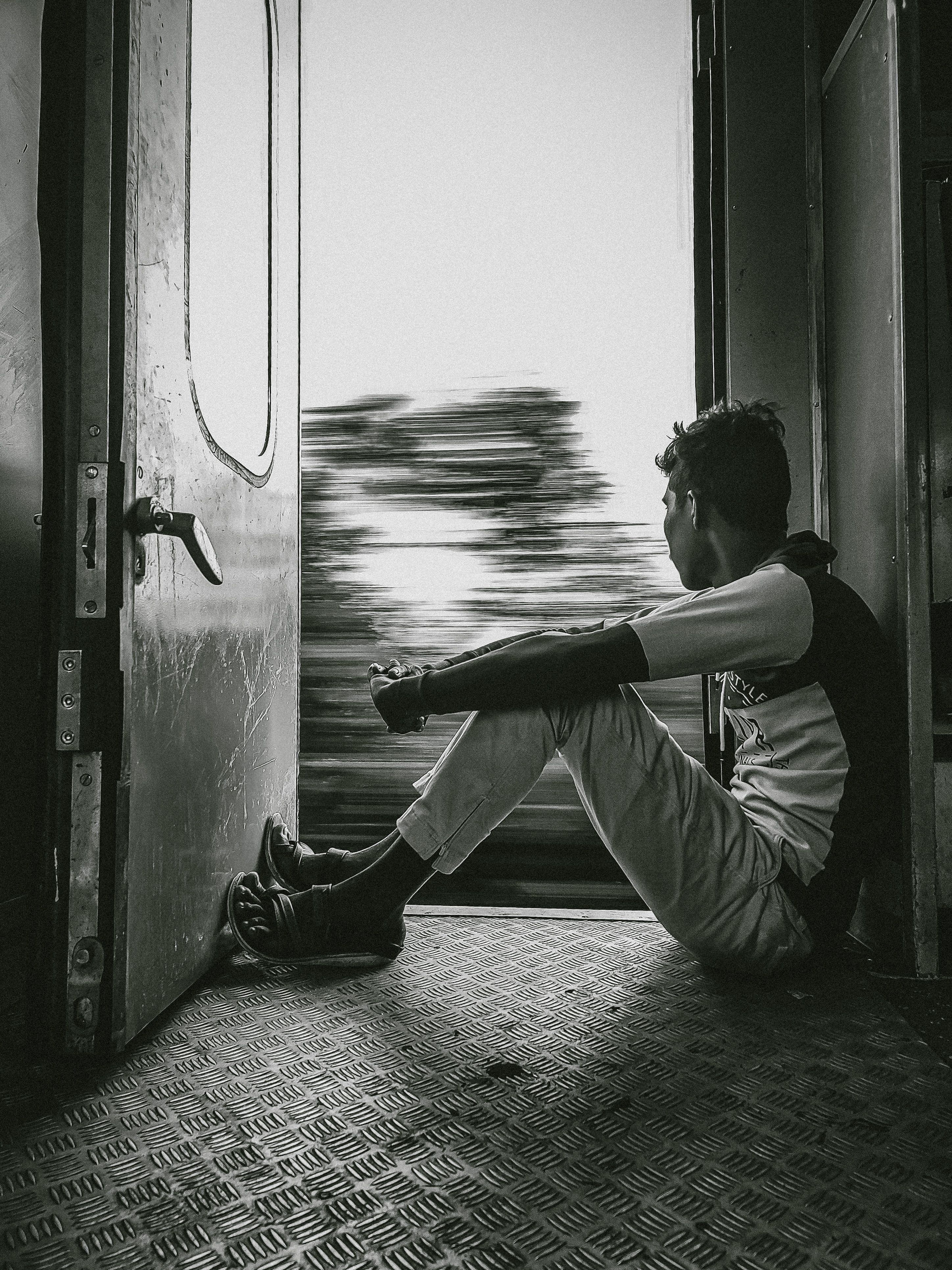
It is one of the first things that surprises visitors on the coastal train, the doors simply stay open, the whole journey, with people sitting right in the doorway, legs hanging out over the tracks, ocean sliding past a few metres away. No barrier, no announcement telling anyone to move back, just open air and a view most other train systems in the world would never allow.
Here is why, and how to actually do it yourself without doing anything genuinely risky.
Why are the doors left open?
Sri Lankan trains, particularly the older rolling stock used on many routes including the coastal line, were simply not built with automatic closing doors in the first place. Many carriages have doors that can be manually closed but are routinely left open, both for airflow, since air conditioning is not standard on most of these trains, and because it has become an accepted, expected part of how the system operates.
There is also a practical boarding and alighting reason. Trains here do not always come to a complete stop for very long at smaller stations, and open doors make it easier for passengers to board and disembark quickly without waiting for a full stop-start cycle every time.
Is it actually legal or officially allowed?
It is a long-standing, widely accepted practice rather than something officially encouraged in a formal safety sense. Nobody stops you from sitting in an open doorway, and it is an established part of the coastal train experience for both locals and visitors, but it is also not something Sri Lanka Railways markets as an official safety feature. Treat it as tolerated custom rather than a certified, risk-free activity.
Sitting in the doorway: how to actually do it
This is genuinely one of the best ways to experience the coastal line, and plenty of people, locals included, do it every day without incident, provided a few basic things are respected.
Hold on to something solid. Most carriages have a handrail or bar near the doorway. Keep at least one hand on it at all times, particularly on any stretch where the train picks up speed.
Do not lean out further than your seated position requires. The view is good enough from a stable seated position in the doorway. Leaning further out for a photo is where most real risk comes from.
Watch for oncoming trains and trackside structures on double lines. Some stretches of track run close enough to a parallel line or trackside poles that leaning out at the wrong moment is genuinely dangerous. If in doubt, pull back in.
Be more cautious with children. Keep a firm hold on any child sitting near an open door, and consider whether a window seat is the safer option for younger kids rather than the doorway itself.
Expect it to be busier at peak times. The doorway is a popular spot, and during busy periods you may not get a clear shot at it, or may need to share the space and take turns.
When is the coastal train doorway experience at its best?
The stretch between Galle and Matara offers some of the closest, most dramatic views of the ocean from the train, with the track running right along the coastline for extended sections. Late afternoon light, in the hour or two before sunset, tends to give the best photography conditions if that matters to you.
A few things worth knowing before you try it
Do not attempt it if the train is moving unusually fast or on an unfamiliar, unclear stretch of track.
Local sense of a "normal" speed comes with experience. If something feels off, move back inside.
Do not bring valuables loose in your hands near the open door.
Phones and cameras have genuinely been lost this way. Use a wrist strap or keep a firm two-handed grip when actually taking a photo.
Do not assume every carriage has the same layout.
Some carriages have better doorway seating and visibility than others. If the first door you find is crowded or awkward, it is worth checking another carriage.
Is it worth doing?
Yes, genuinely, it is one of the more memorable, low-cost experiences on the whole south coast, and a real window into a slightly different relationship with rules and safety than many visitors are used to at home. Respect the basics above, and it is a highlight rather than a hazard.
Frequently asked questions about open train doors in Sri Lanka
Why don't Sri Lankan trains close their doors?
Many carriages, particularly older rolling stock on the coastal line, were not built with automatic closing doors, and doors are commonly left open for airflow and to speed up boarding at smaller stations.
Is it safe to sit in the doorway of a Sri Lankan train?
It is a widely practised, long-standing custom, done by locals and visitors alike, but it carries real risk if done carelessly. Hold on to a rail, do not lean out further than necessary, and stay alert on faster or unfamiliar stretches of track.
Which part of the coastal train has the best doorway views?
The stretch between Galle and Matara runs closest to the shoreline, offering some of the most dramatic ocean views from an open train doorway on the whole route.
Can you get in trouble for sitting in an open train door in Sri Lanka?
No, it is an accepted, tolerated practice rather than a prohibited one, though it is not officially promoted as a safety feature either.
Final thoughts
There is a specific kind of freedom in sitting in an open train doorway with the ocean sliding past a few metres away, no barrier, no safety announcement, just wind and salt air and a view most rail systems would never let you have.
Hold on properly, use common sense, and it might end up being the single most memorable few minutes of your whole south coast trip.