
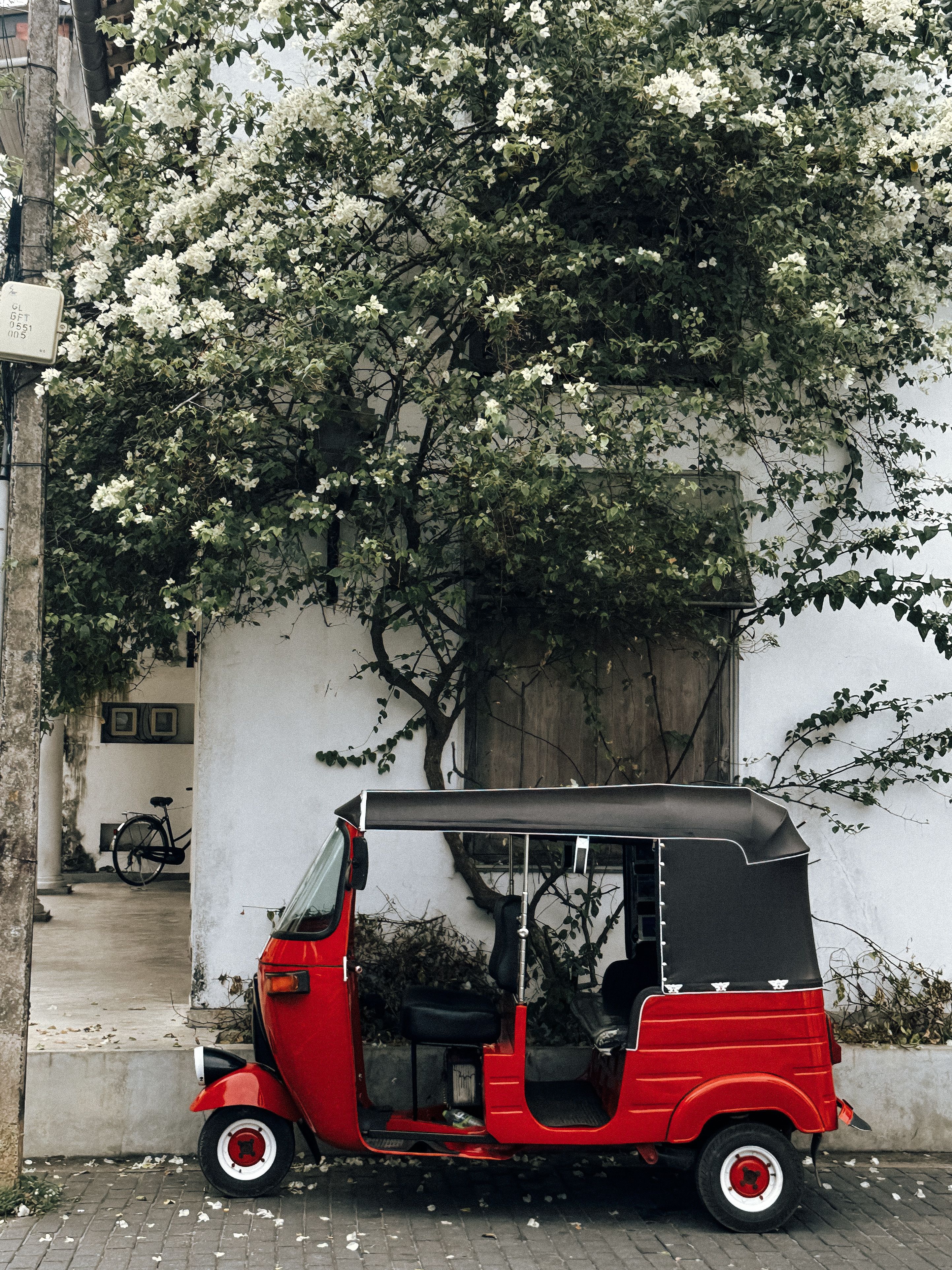
You will notice it within the first hour of arriving on the south coast. Every tuk tuk looks like it belongs to someone, not in a subtle way, but covered, dashboard to bumper, in stickers, decals, tassels, cricket team logos, religious images, cartoon characters, song lyrics, family names, sometimes all at once.
It is not random, and it is not just decoration for decoration's sake. It is one of the more genuine, unfiltered forms of personal expression you will see anywhere on this coast.
The tuk tuk is personal property, and it shows
Most tuk tuks on the south coast are owned, not fleet-managed, by the driver who operates them. Unlike a taxi in a Western city, which usually belongs to a company and looks like every other car in that company's fleet, a Sri Lankan tuk tuk is closer to a personal vehicle, and drivers decorate them the way someone elsewhere might personalise a bedroom, a locker, or a first car.
Religious and protective imagery is common
A significant number of stickers and small ornaments inside and outside a tuk tuk carry religious meaning, images of Buddha, Hindu deities, Christian saints, or Islamic calligraphy, depending on the driver's own faith. These are not purely decorative. Many drivers genuinely view them as a form of protection on the road, alongside a practical safety habit in a vehicle with far less structural protection than a car.
Sports loyalty is everywhere, especially cricket
Cricket runs deep in Sri Lankan culture, and tuk tuks are one of the most visible places that shows up. Player images, team logos, and national flag colours appear constantly, a driver's tuk tuk often doubling as a small, rolling display of sporting loyalty.
Song lyrics, film references and pop culture
Many tuk tuks carry lines from popular songs, references to local and Bollywood films, or simply phrases the driver likes, in Sinhala, Tamil, English or a mix of all three. This is one of the more personal layers, closer to a bumper sticker expressing identity than a functional decal.
Family and personal touches
Names of children, a wife's name, a hometown, a lucky number, these smaller, more personal details are common too, often placed somewhere less visible than the bigger, louder decorations, a small private note within a very public display.
Is it competitive between drivers?
To some extent, yes. A particularly well-decorated, well-maintained tuk tuk can be a point of genuine pride, and drivers do notice and comment on each other's vehicles. It is not purely functional decoration, there is real personal investment and a bit of friendly one-upmanship in how far some drivers take it.
Does the decoration affect the fare?
No, not directly. A heavily decorated tuk tuk is not more expensive than a plain one, and the stickers are not a marketing device aimed at charging tourists more. It is genuinely just personal expression, not a business strategy.
A few things worth noticing next time you're in one
Look at what is placed where. Religious items often sit near the driver's direct eyeline or above the dashboard. Personal items, a child's name, a nickname, are often smaller and more tucked away. The loudest, most visible stickers are usually the ones the driver is proudest of, a favourite team, a favourite song, a favourite film line.
Frequently asked questions about tuk tuk decorations
Why are Sri Lankan tuk tuks covered in stickers?
Most tuk tuks are personally owned rather than company fleet vehicles, and drivers decorate them the way someone might personalise a bedroom or a first car, mixing religious imagery, sports loyalty, pop culture and personal touches.
Do tuk tuk decorations affect the price of a ride?
No. A decorated tuk tuk is not more expensive than a plain one. The decoration is personal expression, not a pricing or marketing strategy.
What do the religious stickers on tuk tuks mean?
Many drivers view religious images and ornaments as a form of protection on the road, in addition to their personal religious significance, reflecting the driver's own faith.
Is tuk tuk decoration common across all of Sri Lanka?
Yes, it is a widespread cultural habit across the country, though the specific mix of stickers, from cricket to film references to religious imagery, varies by individual driver.
Final thoughts
A tuk tuk is not just how you get from one town to the next on this coast, it is often a small, rolling window into the person driving it, their faith, their team, their favourite song, their family.
Next time you climb in, take a second look at what is actually stuck to the dashboard. It usually tells you something real.