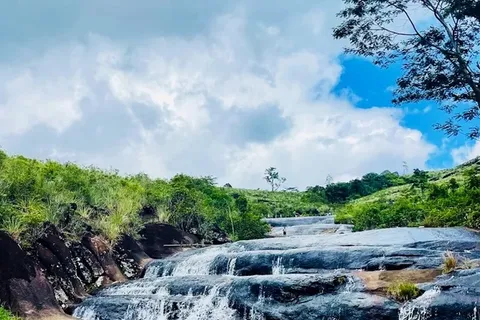
Ahangama sits between Galle and Weligama, about 15 minutes from each by road, and it is the town on the south coast that has changed the most in the last few years. It was always known among surfers who knew where to look. Now it has one of the most developed cafe and restaurant scenes on the coast, a string of boutique guesthouses, and enough going on that people who come for three days often end up extending to a week. It still feels like a real place rather than a resort town, and that is a large part of why people keep coming back.
If you are wondering whether Ahangama is worth building into your route, what the surf breaks actually offer, and how to get there, this guide should help.
Where is Ahangama?
Ahangama is a coastal town on Sri Lanka's south coast, sitting almost exactly between Galle and Weligama, roughly 15 minutes from each by road.
It also has its own railway station on the Colombo to Matara coastal line, which makes it one of the easier south coast towns to reach without a private vehicle.
Is Ahangama worth visiting?
Yes, particularly if surf, good coffee, or a mix of both matter to your trip.
Ahangama offers a genuine surf town feel without the built-up, party-oriented atmosphere of some other south coast spots. It has real depth for a short visit, several distinct surf breaks suiting different levels, one of the best cafe scenes on the coast, and stilt fishermen still working the shallow water offshore in the traditional way.
Treat it as a base of several nights rather than a single day stop, since much of its appeal is in the pace rather than any one attraction.
The best things to do in Ahangama
1. Spend time at Kabalana Beach
Kabalana Beach is the main reason most people come to Ahangama. It is a wide stretch of sand with a relaxed atmosphere, sunbeds available from the beach bars, and clear water. The calmer end of the beach, with softer whitewater, is better suited to beginners learning to surf, while the reef breaks further out are a different matter entirely.
2. Surf the reef breaks, matched to your level
Ahangama has genuine variety in its surf, which is part of what has drawn a more serious surf crowd here in recent years.
The Rock is an A-frame wave that advanced and intermediate surfers rate as one of the best on the south coast.
Marshmallows, slightly further down the beach, offers longer and more forgiving rides suited to intermediate surfers pushing their ability.
Sticks is a fast, powerful break for experienced surfers only.
If you are a beginner, start at the soft sand break near the calmer end of Kabalana and take a lesson with one of the surf schools on the beach before paddling anywhere near the reef.
3. Watch the stilt fishermen
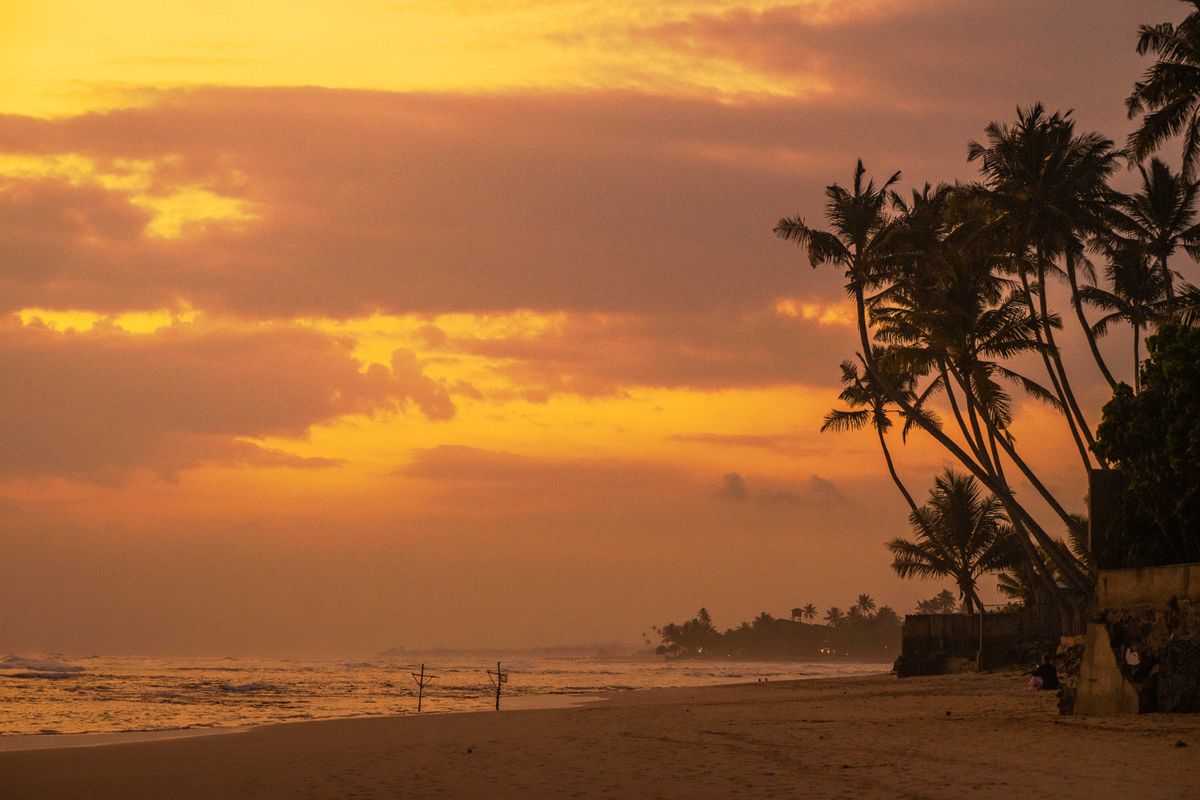
Ahangama is one of the last places on the coast where you can still see fishermen perched on poles driven into the shallow water just offshore, fishing with rods and lines in the traditional way. They fish mostly in the early morning and late afternoon, and it is one of the genuine pieces of living local character left on the south coast.
4. Work your way through the cafe scene
The cafe scene in Ahangama is real and not overpriced the way Mirissa's beachfront can be. Several good coffee shops and brunch spots sit within a short walk of Kabalana, ranging from simple local places to design-led spots with ocean views. The concentration of good cafes per square kilometre is arguably higher here than anywhere else on the south coast. Come hungry in the morning.
5. Day trip to Handunugoda Tea Estate
A short distance inland from Ahangama, Handunugoda Tea Estate produces Virgin White Tea, picked using silver scissors rather than fingers to avoid oxidation. It is an easy, genuinely different half-day addition on a rest day between surf sessions.
How long should you stay in Ahangama?
Two to three nights if Ahangama is one stop among several on a wider south coast route.
Four to seven nights if you are here primarily for surf and want to sample multiple breaks at different times of day and tide.
When is the best time to visit Ahangama?
Ahangama follows the same weather pattern as the rest of the southwest coast, with the main surf and dry season running from roughly November through April, and the southwest monsoon bringing wetter, rougher conditions from May through September.
Early morning tends to offer the calmest water and the best surf conditions, before the wind picks up later in the day.
How to get to Ahangama
Ahangama sits directly on the coastal road and rail line, making it easy to reach from any of the surrounding towns.
From Galle
Take any southbound bus toward Matara and get off at Ahangama, around 20 minutes and 50 to 80 rupees. By tuk tuk, expect to pay around 500 to 800 rupees.
From Weligama
The same bus route in the opposite direction, or a similarly priced tuk tuk in the other direction.
From Colombo
The coastal train runs directly through Ahangama on the Colombo to Matara line, making it a straightforward stop without needing to change transport in Galle or Weligama first.
Ahangama or Weligama: where should you base yourself?
Both sit close enough together that visiting one from the other is easy, so the choice comes down to atmosphere.
Choose Weligama for a wider range of accommodation, more beginner-friendly surf, and slightly more going on in the evenings.
Choose Ahangama for a stronger reef surf scene suited to intermediate and advanced surfers, and a noticeably better concentration of good cafes.
What Ahangama does not have
Relative to Weligama or Galle, Ahangama does not have much to do in the evenings beyond eating and drinking. There is no real nightlife, one beach bar sometimes runs music, and the town closes early. This is not a criticism, just useful to know before you book several nights here expecting a livelier evening scene.
Where to stay in Ahangama
Ahangama has a strong cluster of boutique guesthouses, several with a design-led feel that matches the cafe scene around them. Options range from simple surf camp style stays to more considered boutique properties, generally without the large resort hotels found in Bentota or Hikkaduwa further north.
What should you bring?
Bring board shorts or swimwear suited to regular water time, reef shoes if you plan to surf the reef breaks, and sun protection, since much of the day here is spent outdoors between the beach and the cafes.
A few things I would know before visiting Ahangama
Do not paddle out at the reef breaks as a beginner.
The Rock, Marshmallows and Sticks all require real surf experience. Start at the soft sand break near the calmer end of Kabalana instead.
Do not expect nightlife.
If evenings out matter to your trip, plan them for Weligama or Galle and treat Ahangama as your daytime and surf base.
Do not skip breakfast.
The cafe scene here is genuinely one of the best on the coast, and it is easy to underrate how much of Ahangama's appeal comes from its food rather than just its waves.
Is Ahangama worth adding to your Sri Lanka itinerary?
Yes, particularly if surf and good coffee are both part of what you are looking for. Ahangama offers real variety in its breaks, a genuine local feel rather than a resort atmosphere, and one of the best cafe scenes on the entire south coast.
Start at Kabalana.
Work your way toward the reef once you are ready.
Frequently asked questions about Ahangama
Is Ahangama worth visiting?
Yes, particularly for surfers of any level and anyone who values a strong cafe scene. It works well as a base of several nights rather than a single stop.
How far is Ahangama from Galle?
Ahangama is around 20 minutes from Galle by bus or tuk tuk.
How far is Ahangama from Weligama?
Ahangama is around 15 to 20 minutes from Weligama by tuk tuk or bus.
What are the best surf spots in Ahangama?
Kabalana Beach has a beginner-friendly soft sand break, while The Rock, Marshmallows and Sticks are reef breaks suited to intermediate and advanced surfers respectively.
Does Ahangama have nightlife?
Not really. Ahangama has little evening entertainment beyond eating and drinking, and the town closes early compared to Weligama or Galle.
How many days should I spend in Ahangama?
Two to three nights if it is one stop on a wider route, or four to seven nights if you are here primarily for surf and want to sample multiple breaks.
Final thoughts
Ahangama has quietly become one of the most complete stops on the south coast, without losing the feel of a real town in the process.
Good surf across several breaks. Genuinely excellent coffee. Stilt fishermen still working the shallows the old way. It rewards a slower visit far more than a single afternoon stop, and most people who plan three days here end up wishing they had booked more.