If you have driven the coastal road between Colombo and Galle, you have already passed through Ambalangoda. Most people do not stop.
That is a mistake, and a fairly common one.
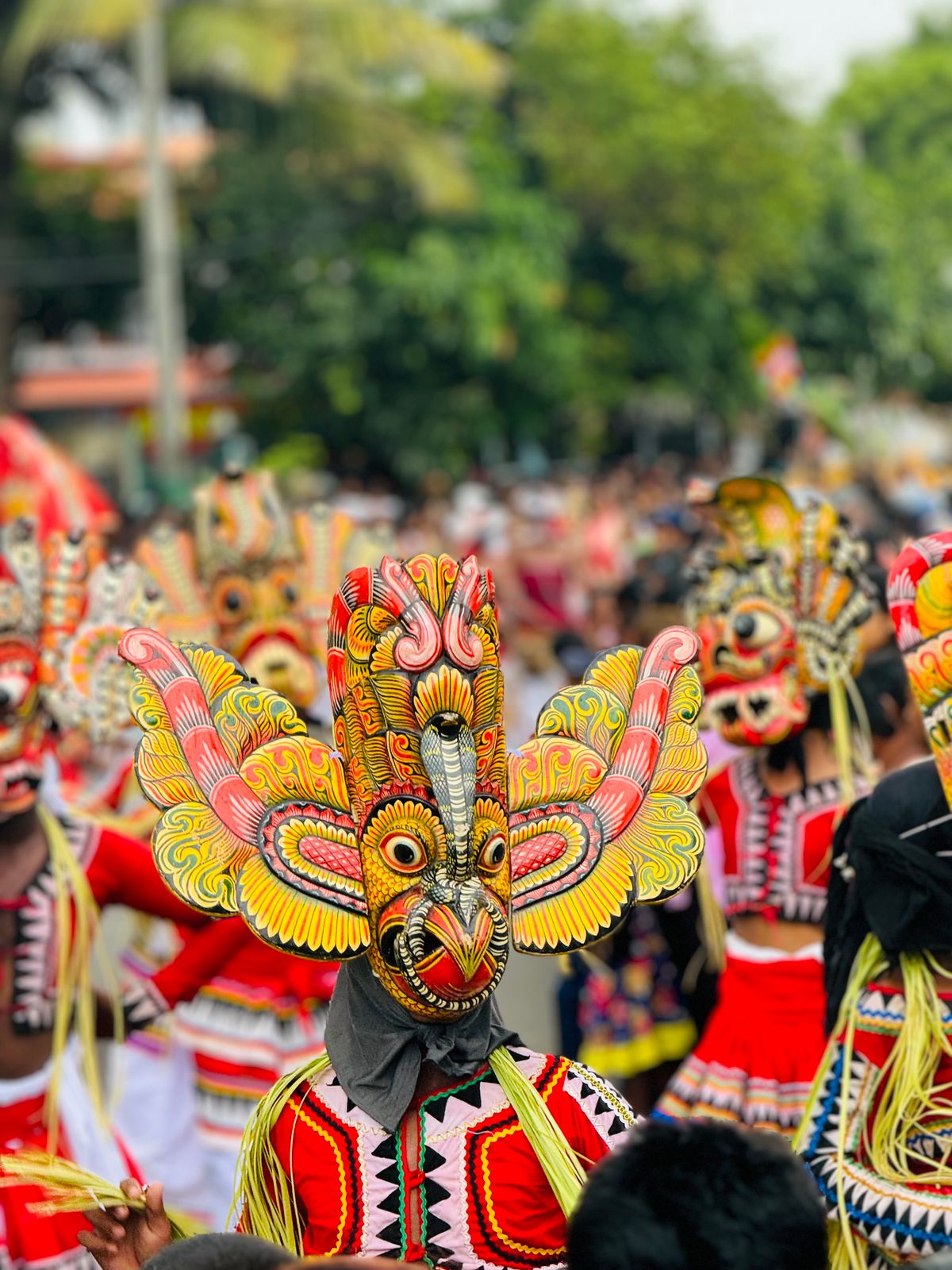
Ambalangoda sits between Bentota and Hikkaduwa, and it is best known in Sri Lanka for one very specific thing: traditional devil mask carving. This is the town where Kolam and Sanni masks, the wide-eyed, brightly painted wooden faces used in ritual dance and exorcism ceremonies, have been carved by the same families for generations. It is also close to Sri Lanka's moonstone mining area, has a quiet stretch of coastline, and works well as a short stop rather than a full base for your trip.
If you are wondering whether Ambalangoda is worth a stop, what there actually is to do, and how it fits into a south coast route, this guide should help.
Where is Ambalangoda?
Ambalangoda is a coastal town in Sri Lanka's Southern Province, roughly halfway between Bentota and Hikkaduwa, and about an hour and a half south of Colombo by car.
It sits directly on the coastal railway line and the main A2 highway, which makes it an easy stop rather than a detour. Most travellers pass through it on the way to Galle, Mirissa or Weligama without ever getting out of the vehicle.
That location is exactly what makes Ambalangoda useful. If you are already travelling the southwest coast, adding a couple of hours here costs you almost nothing in extra travel time.
Is Ambalangoda worth visiting?
Yes, particularly if you are interested in Sri Lankan craft, ritual culture or something different from another beach town.
Ambalangoda is not a place people build a whole holiday around, and it does not need to be. Its appeal is specific rather than broad. This is the centre of Sri Lanka's traditional mask carving industry, and it is one of the few places on the south coast where you can watch an actual craft being made rather than just sold.
It is also close to Meetiyagoda, the area most associated with Sri Lankan moonstone mining, and it has a beach and a small fort area that see very few tourists compared to Hikkaduwa just down the road.
Think of Ambalangoda as a half-day or full-day stop that adds texture to a south coast trip, not a place to base yourself for a week.
The best things to do in Ambalangoda
1. Visit the Ariyapala Mask Museum
If you only do one thing in Ambalangoda, make it this.
The Ariyapala Mask Museum, run by one of the town's long-established mask carving families, displays traditional Kolam and Sanni masks alongside an explanation of what each one represents. Many of these masks are tied to specific characters in Kolam folk dance or specific illnesses in Sanni exorcism ritual, and each carved face has a story behind it rather than being purely decorative.
The workshop attached to the museum is often the more interesting part. You can watch carvers working with kaduru wood, the same soft, light timber that has been used for these masks for generations, and see the painting process that gives each mask its features.
A good question to ask before buying anything is:
Is this mask hand carved on site, or is it a factory import?
Genuine Ambalangoda workshops are usually happy to answer this directly, and the difference in price and quality is significant.
2. Watch a Kolam or low-country dance performance if you can time it
Kolam is a masked folk drama traditionally performed at village festivals, using many of the same mask characters displayed in the museums. Performances are not scheduled daily, so this is very much a "check ahead" activity rather than something you can guarantee.
If your visit happens to line up with a cultural event or a hotel-arranged performance nearby, it is worth prioritising. Seeing the masks used in motion, with drumming and narration, makes far more sense of them than viewing them mounted on a wall.
3. Explore the moonstone mines near Meetiyagoda
A short drive inland from Ambalangoda takes you to Meetiyagoda, the area most closely associated with Sri Lankan moonstone mining.
Sri Lanka is one of the few places in the world where high quality blue moonstone is found, and small-scale mining pits in this area still produce it. Some local operations allow visitors to see the mining pits and the cutting and polishing process, turning a rough stone into the smooth, glowing gem you see set in jewellery.
This is a good stop if you are interested in gemstones, but treat any sales pitch with the same caution you would use anywhere in Sri Lanka. Ask questions, compare prices if you are actually buying, and never feel pressured to purchase on the spot.
4. Walk through Ambalangoda's old town and fort area
Ambalangoda has a small Dutch-era fort and a old town core with colonial period buildings, though it is far less restored and far less visited than Galle Fort.
This is not a polished heritage site. It is a working coastal town that happens to have some colonial architecture mixed into it. If you enjoy wandering somewhere without a ticket booth or a set route, it is worth twenty or thirty minutes.
5. Spend time at Ambalangoda Beach
The beach here is long, relatively undeveloped, and mostly used by local fishing communities rather than tourists.
You will see fishing boats pulled up on the sand and nets being repaired more often than sun loungers. Swimming conditions vary and the sea can be rough, so check local conditions before going in rather than assuming it is safe.
If you want a quiet walk along the sand without beach clubs or crowds, this delivers that. If you want organised water sports and beach restaurants, Hikkaduwa a short drive south does that better.
6. Visit a puppet workshop
Ambalangoda's tradition of craft extends beyond masks into traditional Sri Lankan puppetry as well, and a small number of workshops in and around the town still make and repair marionettes used in traditional puppet theatre.
It is a niche stop, but it fits the same theme as the mask museums: a disappearing craft, still being kept alive by a small number of families.
How long should you stay in Ambalangoda?
For most travellers, half a day to a full day is enough.
A simple half-day stop could look like this:
Arrive late morning.
Visit the Ariyapala Mask Museum and workshop.
Walk through the old town and fort area.
Have lunch locally.
Continue on to Hikkaduwa or Galle in the afternoon.
If you want to add Meetiyagoda's moonstone mines, build in an extra hour or two, since it is a short drive inland rather than directly on the coast road.
Ambalangoda does not really reward an overnight stay unless you specifically want a quiet base away from the busier resort towns. Most travellers treat it as a stop on the way between Colombo and the south coast rather than a destination in its own right.
When is the best time to visit Ambalangoda?
Ambalangoda sits on the southwest coast, so its weather pattern follows Hikkaduwa and Galle rather than the east coast.
The drier period generally runs from December through March, while the southwest monsoon can bring wetter conditions from May through September. Since most of what you are doing in Ambalangoda is indoors, at the mask museum or moonstone workshops, a rainy day here matters far less than it would at a beach town.
That makes Ambalangoda a genuinely useful stop even during south coast monsoon months, when Hikkaduwa and Mirissa are less appealing for swimming.
How to get to Ambalangoda
Ambalangoda is one of the easier south coast towns to reach, since it sits directly on the main coastal road and rail line.
From Colombo
Ambalangoda is around 85 kilometres south of Colombo, roughly 1.5 to 2 hours by car depending on traffic.
The coastal train line also stops here, and the journey is a scenic one, running close to the shoreline for long stretches.
From Galle
Ambalangoda is north of Galle, around 40 minutes by car or a similar amount of time by train.
It works well as a stop on the way up to Colombo, or as a half-day detour from Galle if you are based there for a few nights.
From Hikkaduwa
Ambalangoda is very close to Hikkaduwa, generally 15 to 20 minutes by tuk tuk or car.
This is the easiest way to add Ambalangoda to a trip: stay in Hikkaduwa and treat Ambalangoda as a short excursion rather than a separate stop on your route.
From Bentota
Ambalangoda is also a short drive from Bentota, similarly around 20 to 30 minutes.
Between Bentota's resort feel and Hikkaduwa's surf and nightlife scene, Ambalangoda makes an easy cultural detour from either base.
Ambalangoda or Hikkaduwa?
This is not really a competition, since the two work well together rather than as alternatives.
Choose Hikkaduwa for beach time, surfing, snorkelling, restaurants and nightlife.
Choose Ambalangoda for mask carving culture, moonstone mines and a quieter, more local atmosphere.
Most travellers are best served by staying in Hikkaduwa and visiting Ambalangoda as a half-day trip, rather than trying to choose one over the other.
Where to stay near Ambalangoda
Ambalangoda itself has limited tourist accommodation compared to Hikkaduwa, Bentota or Galle.
Most travellers base themselves in one of those nearby towns and visit Ambalangoda as a day trip. If you specifically want to stay in or very near Ambalangoda for a quieter, more local experience, there are a small number of guesthouses in town, though options are far more limited than the bigger resort areas nearby.
If you are travelling without a car, staying in Hikkaduwa and taking a short tuk tuk ride is the simplest way to fit Ambalangoda into your trip without needing to change accommodation.
What should you bring?
For a half-day or full-day stop in Ambalangoda, keep it simple.
Bring cash for the museum entry fee and for the workshop, since smaller family-run operations do not always take cards. Comfortable shoes are useful for walking through the old town and fort area.
If you plan to buy a mask or a moonstone piece, ask about shipping options in advance if you are travelling with hand luggage only, since some carved masks are larger than they first appear in photos.
A simple half-day Ambalangoda stop
If you are passing through, this is how I would structure it.
10:00 am
Arrive and head to the Ariyapala Mask Museum.
11:00 am
Watch the carving workshop and browse the museum collection.
12:00 pm
Walk through the old town and fort area.
1:00 pm
Have lunch locally.
2:00 pm
Optional: drive to Meetiyagoda for the moonstone mines.
3:30 pm
Continue your journey south or back toward Colombo.
A few things I would know before visiting Ambalangoda
Do not expect a polished, ticketed tourist attraction.
The mask museums and workshops are genuine working spaces, not purpose-built visitor centres, and that is part of what makes them worth seeing.
Do not assume every mask on sale is hand carved in Ambalangoda itself.
Ask directly if it matters to you, and expect to pay more for a genuinely hand carved piece than for a mass produced souvenir version.
Do not feel obligated to buy at the moonstone mines.
Look, ask questions, and only buy if you actually want the piece and are comfortable with the price.
Do not plan a full day here unless mask carving and moonstone mining genuinely interest you.
For most travellers, half a day covers it well.
Is Ambalangoda worth adding to your Sri Lanka itinerary?
I think so, particularly if your route already runs along the southwest coast between Colombo and Galle.
Ambalangoda will not compete with Galle Fort or Mirissa's beaches for attention, and it is not trying to. What it offers instead is a genuine look at a craft tradition that is still alive, still practised by the same families, and still largely unknown to visitors who drive straight past on their way to the next beach town.
Add in the moonstone mines nearby, a quiet stretch of working beach, and an old town that has not been rebuilt for tourists, and you have a stop that costs you very little time but adds something most south coast itineraries are missing.
Come for the masks.
Stay long enough to see how they are made.
Frequently asked questions about Ambalangoda
What is Ambalangoda famous for?
Ambalangoda is best known for traditional devil mask carving, including Kolam and Sanni masks used in Sri Lankan folk dance and ritual ceremonies. It is also known for its proximity to the moonstone mines at Meetiyagoda.
Is Ambalangoda worth visiting?
Yes, especially for travellers interested in Sri Lankan craft and culture. It is best treated as a half-day or full-day stop rather than a place to base your whole trip.
What is there to do in Ambalangoda?
The main attractions are the mask museums and carving workshops, such as the Ariyapala Mask Museum, the moonstone mines near Meetiyagoda, the old town and fort area, and a quiet local beach.
How far is Ambalangoda from Galle?
Ambalangoda is around 40 minutes north of Galle by car or train.
How far is Ambalangoda from Hikkaduwa?
Ambalangoda is very close to Hikkaduwa, generally 15 to 20 minutes away, making it an easy half-day trip if you are based there.
Can you visit Ambalangoda as a day trip?
Yes. Ambalangoda works well as a day trip or half-day stop from Hikkaduwa, Bentota or Galle, and is also a natural stopover between Colombo and the south coast.
Where can you see moonstone mining near Ambalangoda?
The area around Meetiyagoda, a short drive inland from Ambalangoda, is Sri Lanka's main moonstone mining region and the closest place to see the mining and cutting process in person.
Is Ambalangoda Beach good for swimming?
Swimming conditions vary and the beach is used mainly by local fishing communities rather than tourists. Check local conditions before swimming rather than assuming it is safe.
Final thoughts
There are places on Sri Lanka's south coast that everyone stops at, and places that everyone drives past.
Ambalangoda is firmly in the second category, and that is exactly why it is worth the detour.
Watch a mask being carved. Ask a family who has done this for generations why a particular face represents a particular spirit. Walk through an old town that has not been rebuilt for visitors. See a moonstone before it becomes jewellery.
You will not spend a whole day here, and you do not need to.
But an hour or two in Ambalangoda tells you something about Sri Lanka that a beach never will.