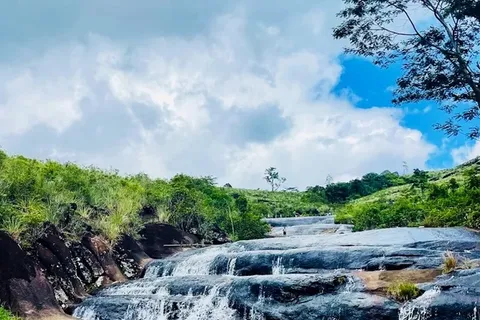
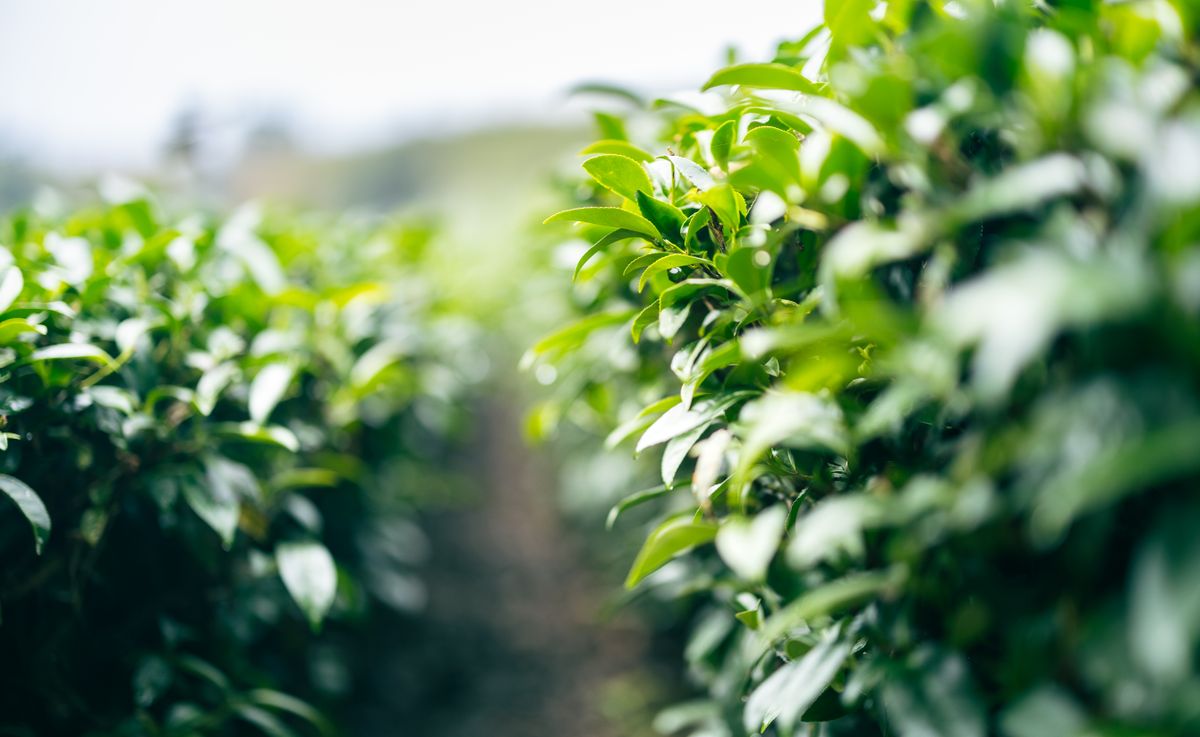
Most people associate Sri Lankan tea with the hill country, Nuwara Eliya, Ella, and the vast highland estates you see on postcards. Few know that one of the most unusual teas in the world is grown down here, close to the beach, at a small estate just inland from Ahangama.
Handunugoda Tea Estate is the home of Virgin White Tea, a tea style unlike almost anything else produced in Sri Lanka, picked using silver scissors rather than fingers, to avoid any oxidation from skin contact with the leaf. It sits a short drive from the surf breaks and beach cafes of Ahangama and Midigama, making it one of the easiest and most unexpected detours on the entire south coast.
If you are wondering what makes this tea so different, what a visit actually involves, and how to fit it into a surf-focused stretch of your trip, this guide should help.
Where is Handunugoda Tea Estate?
Handunugoda Tea Estate is a working tea plantation a short distance inland from Ahangama, on Sri Lanka's south coast, roughly 20 minutes from Galle and a similar distance from Weligama.
Unlike the sprawling highland estates of the central hill country, Handunugoda sits in the lower coastal belt, close enough to the beach towns that it functions as a half-day add-on rather than a separate hill-country excursion.
What makes Virgin White Tea different?
This is worth understanding before you visit, since it is the entire reason the estate is known internationally.
Most tea, black, green or white, involves some degree of processing that includes contact between the leaf and human skin during plucking and handling, which introduces a small amount of oxidation from the start. Virgin White Tea is picked using silver scissors instead of fingers specifically to avoid this contact, an approach developed at Handunugoda that is genuinely rare among tea producers worldwide.
The result is a delicate, pale, subtly flavoured tea, sold at a significant premium compared to standard black or green tea, and marketed as one of the more expensive teas produced anywhere in the world. Whether or not the price justifies the difference in flavour is a matter of personal taste, but the production method itself is a genuine point of interest even if you are not usually a tea connoisseur.
Is Handunugoda Tea Estate worth visiting?
Yes, particularly if your south coast trip already includes time in Ahangama or Weligama for surfing, and you want a genuinely different kind of stop between sessions.
Handunugoda offers something almost nothing else on this stretch of coast does: a working agricultural estate with a guided tour, a tasting, and a story about production methods that most visitors have never encountered. It is a low-key, unhurried kind of stop, well suited to a rest day between surf sessions.
Treat it as a one to two hour visit, easily combined with a beach day in Ahangama.
The best things to do at Handunugoda
1. Take the guided tea tour
Most visits start with a walk through the tea garden and processing areas, where a guide explains the full process from picking to drying to grading, including the specific silver-scissor method used for Virgin White Tea. This is a hands-on, informal tour rather than a scripted museum walk, and questions are generally welcomed.
2. Watch or try hand-picking
Depending on the day and season, you may be able to see pickers at work in the garden, or in some cases try picking a few leaves yourself under guidance. Watching the precision involved in picking for white tea specifically, using scissors rather than fingers, is a small detail that makes the whole process feel more tangible.
3. Sample the tea range
A tasting is usually included as part of the visit, generally covering several tea styles produced at the estate, from the standard black teas to the specialty white teas the estate is known for. This is the best way to actually judge whether the flavour difference matches the reputation and price.
4. Buy tea directly from the estate
If you want to bring some home, buying directly from the estate is generally more reliable than buying from tourist shops elsewhere on the coast, where sourcing and freshness can be inconsistent. Prices for the specialty white teas are notably higher than standard tea, so decide in advance roughly what you are comfortable spending.
How long should you stay at Handunugoda?
For most visitors, one to two hours is enough, covering the guided tour and tasting.
A simple visit could look like this:
Arrive mid-morning or early afternoon.
Join the guided tour through the tea garden and processing areas.
Sit for the tasting, trying a few different tea styles.
Browse and buy tea directly from the estate before heading back to the coast.
This fits naturally into a rest day between surf sessions in Ahangama or Weligama, rather than requiring a dedicated day of its own.
When is the best time to visit Handunugoda?
Handunugoda operates as a working estate year-round, and a visit is genuinely possible in any season, since the tour and tasting are largely indoor and undercover activities.
That said, the estate follows the same broader weather pattern as the rest of the southwest coast, generally drier from December through March or April, wetter during the southwest monsoon months from May through September. A dry day makes walking through the garden itself more comfortable, though it is not essential to the visit.
How to get to Handunugoda Tea Estate
Handunugoda sits close to the main surf towns of the south coast, making it an easy stop by tuk tuk or car.
From Ahangama
Handunugoda is very close to Ahangama, generally 10 to 15 minutes by tuk tuk or car.
This is the closest base, and most visitors combine a Handunugoda visit with time in Ahangama for surfing.
From Weligama
Handunugoda is around 15 to 20 minutes from Weligama by tuk tuk or car.
From Galle
Handunugoda is roughly 20 to 25 minutes from Galle by car.
From Unawatuna
Handunugoda is around 25 to 30 minutes from Unawatuna by car or tuk tuk.
Handunugoda or a hill country tea estate: do you need both?
If your trip includes time in the hill country, Ella or Nuwara Eliya offer a larger-scale, more classically scenic tea estate experience, set among rolling highland tea gardens with cooler temperatures.
Choose a hill country estate if scenic tea plantation landscapes and cooler mountain air are part of what you are after.
Choose Handunugoda if you are staying on the south coast and want a specific, unusual production story, Virgin White Tea, without leaving your surf-focused itinerary.
They are different experiences rather than direct substitutes. If your trip only covers the south coast, Handunugoda fills the tea-estate gap well without requiring a detour inland.
Where to stay near Handunugoda
Handunugoda has no accommodation of its own, and none is needed given how short a visit tends to be.
Ahangama and Weligama both offer a wide range of guesthouses and surf-focused accommodation within a short drive, and either works well as a base for a Handunugoda visit alongside your usual beach and surf plans.
What should you bring?
Keep it simple for a stop like this.
Bring cash if you plan to buy tea directly from the estate, since smaller operations do not always take cards. Comfortable, closed shoes are useful for walking through the tea garden itself.
A few things I would know before visiting Handunugoda
Do not expect a large-scale hill country estate experience.
This is a smaller, coastal operation, genuinely interesting for its production method rather than for sprawling mountain scenery.
Do not assume all the tea on sale is the expensive specialty white tea.
The estate produces a full range, and prices vary significantly between standard and specialty teas, so ask before assuming a price.
Do not rush the tasting.
Taking time to actually compare a few different tea styles side by side is the best way to judge whether the white tea's reputation matches your own taste.
Is Handunugoda worth adding to your Sri Lanka itinerary?
I think so, particularly if you are spending time surfing around Ahangama or Weligama and want a low-key, genuinely different stop on a rest day.
Handunugoda will not compete with the hill country's tea estate scenery, and it does not need to. What it offers instead is a close look at one of the more unusual tea production methods in the world, produced within easy reach of the beach rather than requiring a trip inland.
Watch the scissors do the picking.
Taste the difference for yourself.
Frequently asked questions about Handunugoda Tea Estate
What is Handunugoda Tea Estate known for?
Handunugoda is known as the home of Virgin White Tea, picked using silver scissors rather than fingers to avoid oxidation from skin contact, making it one of the more unusual and expensive teas produced anywhere in the world.
Is Handunugoda Tea Estate worth visiting?
Yes, particularly if you are already spending time in Ahangama or Weligama for surfing and want a different kind of stop on a rest day. A visit typically takes one to two hours.
How far is Handunugoda from Ahangama?
Handunugoda is very close to Ahangama, generally 10 to 15 minutes by tuk tuk or car.
How far is Handunugoda from Weligama?
Handunugoda is around 15 to 20 minutes from Weligama by tuk tuk or car.
What is Virgin White Tea?
Virgin White Tea is a specialty tea produced at Handunugoda, picked using silver scissors instead of fingers to avoid oxidation from skin contact with the leaf, resulting in a pale, delicate tea sold at a significant premium.
Can you buy tea directly at Handunugoda?
Yes. Most visits include the option to buy tea directly from the estate, generally considered more reliable for freshness and sourcing than buying from tourist shops elsewhere.
Final thoughts
Sri Lanka's tea story usually gets told in the hill country, misty mountains, sweeping plantation views, cooler air. Handunugoda tells a different version of it, one that happens to sit a short tuk tuk ride from some of the best surf breaks on the south coast.
Silver scissors instead of fingers. A tasting that lets you judge the difference yourself. A working estate that most visitors to Ahangama drive past without knowing it is there.
It will not take up your whole day.
But it might change how you think about the cup of tea in front of you.