Between Tangalle and Hambantota, the coast road runs past a lagoon most travellers never notice. Kalametiya Bird Sanctuary sits quietly here, a wetland reserve that draws a genuinely serious range of birdlife, without the crowds or the fixed safari-jeep circuit of its better-known neighbour, Bundala.
If Yala and Bundala are on your route for wildlife, Kalametiya offers something different: a slower, boat-based way to see birds up close on calm lagoon water, at a fraction of the visitor numbers.
If you are wondering what is actually at Kalametiya, how it compares to Bundala, and how to fit it into a south coast route, this guide should help.
Where is Kalametiya Bird Sanctuary?
Kalametiya is a lagoon and wetland reserve on Sri Lanka's south coast, between Tangalle and Hambantota, close to the Ussangoda plateau.
It comprises a series of lagoons, marshland and scrub habitat close to the coast, protected as a sanctuary for the wide range of resident and migratory birds that use the wetland. Unlike Bundala or Yala, Kalametiya sees relatively few visitors, which is exactly what makes a boat trip here feel more like genuine birdwatching than a wildlife-spotting circuit.
What can you see at Kalametiya?
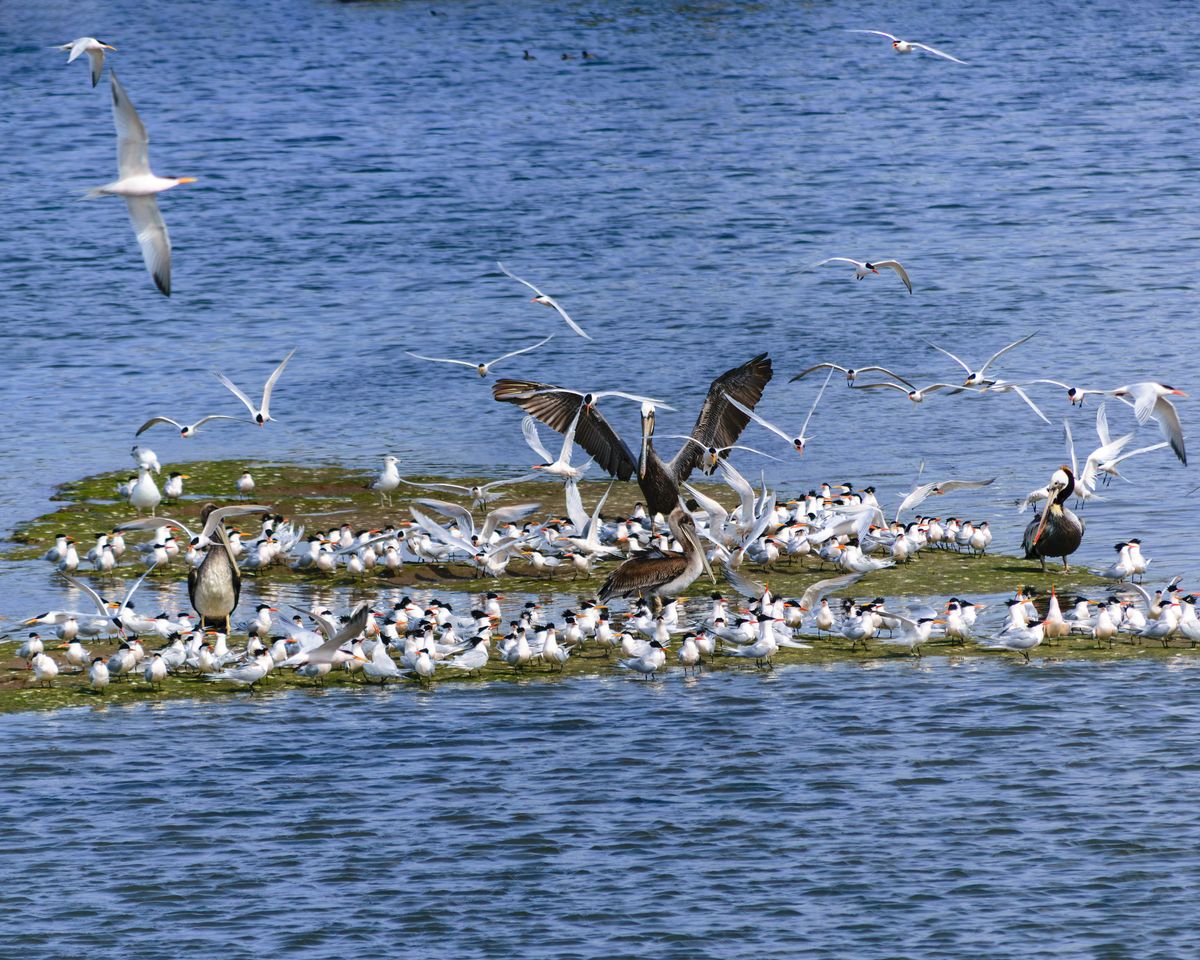
Kalametiya's lagoon and wetland habitat supports a genuinely wide range of birdlife across the year, including numerous species of heron, egret, stork and other waterbirds that feed and nest around the lagoon's edges and shallows.
The reserve also sees migratory species during the northern winter months, when birds arriving from further afield add to the resident population, a pattern shared with Bundala and other wetland sites along this stretch of coast. Beyond birds, the lagoon and surrounding scrub are also home to other wildlife, including various reptiles and, depending on the season and water levels, occasional larger mammals passing through the margins of the reserve.
Is Kalametiya worth visiting?
Yes, particularly if you enjoy birdwatching, prefer a slower and quieter wildlife experience to a jeep safari, or simply want something different from Yala and Bundala on a route that already includes both.
Kalametiya will not deliver the leopard sightings Yala is famous for, and it should not be compared on those terms. What it offers instead is a genuinely peaceful boat trip across still lagoon water, close enough to the birdlife to actually observe behaviour rather than just tick off a sighting from a distance.
Treat it as a two to three hour stop, ideally in the early morning or late afternoon when bird activity is highest.
The best things to do at Kalametiya
1. Take a boat safari across the lagoon
A small boat, generally a simple local boat rather than a large tourist vessel, takes visitors quietly across the lagoon, weaving through channels and past nesting and feeding areas. The slow pace and low noise of a boat compared to a jeep safari means birds are often far less disturbed, allowing closer, longer observation.
Bring binoculars if you have them, and a zoom lens if photography matters to you, since the boat generally keeps a respectful distance from nesting birds.
2. Watch for migratory species in season
During the northern winter months, roughly November through March, migratory birds add significantly to what can be seen at Kalametiya, alongside the resident population present year-round. If birdwatching is a priority for your trip, timing a visit within this window is worth planning around.
3. Explore the mangrove and marsh edges
Beyond the open lagoon, Kalametiya's mangrove fringes and marshland edges support their own distinct set of species and are worth asking your boat operator to include as part of the route, rather than sticking only to open water.
4. Combine it with Ussangoda or Tangalle
Given its location between Tangalle and Hambantota, close to the Ussangoda plateau, Kalametiya works naturally as part of a longer day exploring this quieter stretch of coast rather than as an isolated trip.
How long should you stay at Kalametiya?
For most visitors, two to three hours is enough, including the boat trip itself and time to arrange it locally.
A simple visit could look like this:
Arrive in the early morning or late afternoon, when bird activity is highest.
Arrange a boat with a local operator at the lagoon.
Spend one to two hours on the water, moving slowly through the channels and open lagoon.
Continue on toward Tangalle, Ussangoda or Hambantota afterward.
This works well as a half-day addition to a Tangalle-based day, rather than requiring a separate overnight stay.
When is the best time to visit Kalametiya?
Kalametiya follows a mixed weather influence given its position near the transition between the southwest coast and the drier southeast, but broadly sees drier conditions from around May through September and a wetter period from October through January.
For birdwatching specifically, the northern winter migratory season, roughly November through March, tends to offer the widest range of species, even though this overlaps with a somewhat wetter period locally. Early morning or late afternoon light, both for visibility of birds and for photography, tends to offer calmer water and more active birdlife than the middle of the day.
How to get to Kalametiya Bird Sanctuary
Kalametiya sits on the coast between Tangalle and Hambantota, making a private vehicle or hired tuk tuk the most practical way to reach it.
From Tangalle
Kalametiya is around 15 to 20 kilometres from Tangalle, roughly 20 to 30 minutes by car or tuk tuk.
This is the closest base with real tourist infrastructure, and most visitors reach Kalametiya as a half-day trip from Tangalle.
From Hambantota
Kalametiya is roughly 20 to 30 minutes from Hambantota by car, making it a reasonable stop if you are already travelling toward or from a Yala or Bundala safari.
From Ussangoda
If you have already read our guide to Ussangoda, Kalametiya sits close by, generally 15 to 20 minutes apart, making it easy to combine both into a single half-day exploring this quieter stretch of coast.
From Mirissa or Weligama
Kalametiya is a longer trip from Mirissa or Weligama, generally an hour to an hour and 15 minutes by car, since it sits well east of both towns.
Kalametiya or Bundala: which should you choose?
Both are wetland bird sanctuaries in the same general area, but they offer noticeably different experiences.
Choose Bundala if you want a more established, larger reserve with a broader range of habitats and a slightly wider tourist infrastructure, generally explored by jeep as well as boat in parts.
Choose Kalametiya if you specifically want a quieter, boat-based lagoon experience with far fewer visitors, well suited to a slower, closer style of birdwatching.
If your route allows it, and birdwatching is a real priority rather than a passing interest, visiting both gives a fuller picture of the wetland habitats along this stretch of coast.
Where to stay near Kalametiya
Kalametiya has no tourist accommodation of its own. Tangalle is the closest practical base, with a full range of guesthouses and hotels, and puts Kalametiya within a straightforward twenty to thirty minute drive.
What should you bring?
Keep it practical for a boat trip like this.
Bring sun protection, since there is little shade out on the open lagoon. Binoculars and a zoom lens are worth packing if birdwatching or photography matter to you. A light layer is useful for early morning starts, when the air over the water can feel cooler than expected.
A few things I would know before visiting Kalametiya
Do not expect a large-scale tourist operation.
Boat safaris here are generally arranged with small, local operators rather than a formal visitor centre, part of what keeps the experience quiet and personal.
Do not rush the boat trip.
The slower you go, the more birds you will actually see settle back into their normal behaviour rather than flushing away from the boat.
Do not skip early morning or late afternoon in favour of a midday visit.
Bird activity and light both drop off noticeably in the middle of the day.
Is Kalametiya worth adding to your Sri Lanka itinerary?
I think so, particularly if birdwatching genuinely interests you, or if you want a quieter, slower wildlife experience to balance out a Yala or Bundala safari elsewhere on your trip.
Kalametiya will not give you the drama of a leopard sighting, and it is not trying to. What it offers instead is a still lagoon, a small boat moving quietly through the channels, and a chance to actually watch birds behave naturally rather than catching a brief glimpse from a moving jeep.
Go early.
Let the boat move slowly.
Frequently asked questions about Kalametiya Bird Sanctuary
What is Kalametiya Bird Sanctuary known for?
Kalametiya is known for its lagoon and wetland habitat supporting a wide range of resident and migratory birds, explored by quiet boat safari rather than jeep, with far fewer visitors than nearby Bundala or Yala.
Is Kalametiya worth visiting?
Yes, particularly for travellers interested in birdwatching or a slower, quieter wildlife experience. A visit typically takes two to three hours, best done in early morning or late afternoon.
How far is Kalametiya from Tangalle?
Kalametiya is around 15 to 20 kilometres from Tangalle, roughly 20 to 30 minutes by car or tuk tuk.
Is Kalametiya better than Bundala for birdwatching?
They offer different experiences rather than one being better. Bundala is larger and more established, while Kalametiya offers a quieter, boat-based lagoon experience with fewer visitors.
When is the best time to see migratory birds at Kalametiya?
Migratory birds are most numerous during the northern winter months, roughly November through March, alongside the resident bird population present year-round.
Can you do a boat safari at Kalametiya?
Yes. Small local boats take visitors across the lagoon and through its channels, generally arranged directly with local operators at the site rather than through a formal booking system.
Final thoughts
Most wildlife itineraries on this coast are built around jeeps and leopards. Kalametiya asks for something different: quiet, patience, and a boat moving slowly enough that the birds barely notice you are there.
You will not need a full day.
But if birdwatching interests you at all, or you simply want a calmer counterpoint to a Yala safari elsewhere on your trip, a few hours on this lagoon are hard to match anywhere else on the south coast.