Koggala sits about 15 kilometres south of Galle and 10 minutes north of Ahangama, and most people who drive the coastal road between the two towns see nothing but the road. Koggala has a lake, a cinnamon island, the best remaining stilt fishermen on the coast, and a small folk museum that is one of the most honest cultural stops you can make on the south coast. None of it takes more than a half-day to see properly.
Getting there. From Galle, any southbound bus passes through Koggala. Tell the conductor and get off at the lake or the main junction. By tuk-tuk from Galle, expect around 500 to 700 rupees. From Ahangama it is a short tuk-tuk or bus ride in the opposite direction. Koggala also has a railway station on the Colombo to Matara coastal line.
Koggala Lake boat safari. The lake is large, shallow in places, and surrounded by mangroves. A guided boat trip takes around one and a half to two hours and covers the main channels and islands. You pass through mangrove corridors, spot water monitors and purple herons on the banks, and visit Cinnamon Island, a small inhabited island where a local family runs a cinnamon plantation. The tour includes a demonstration of how cinnamon bark is peeled, dried, and rolled into quills, a cup of cinnamon tea, and an attempt to sell you cinnamon products. Buy something if you want to or politely decline, but the demonstration itself is genuinely interesting and the island is worth seeing. Arrange the boat through your guesthouse or find one of the operators at the lake edge. Prices are not fixed and range from around 2,500 to 4,000 rupees per boat depending on negotiation.
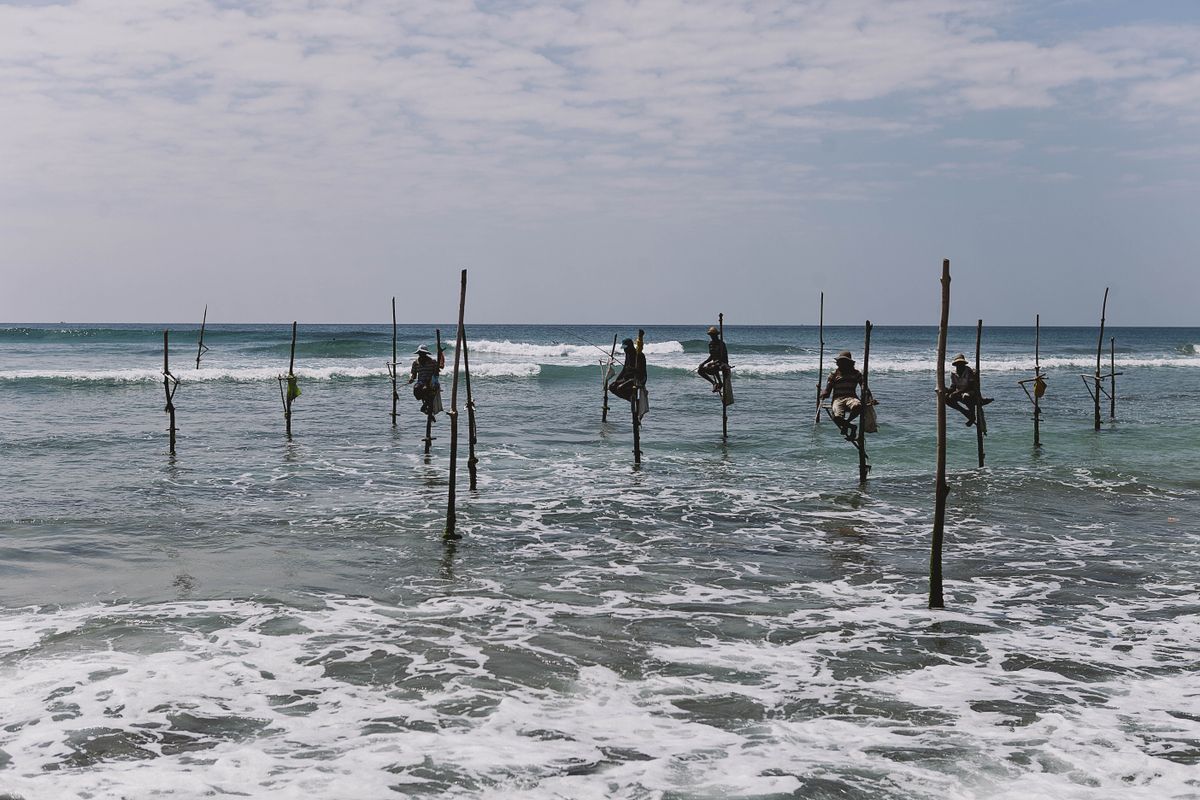
The stilt fishermen. This stretch of coast between Koggala and Ahangama is one of the last places in the world where stilt fishing is still practised in any meaningful way. Fishermen balance on a crossbar tied to a pole driven into the seabed, fishing with a thin rod in the shallow waters just offshore. The practice is unique to this part of Sri Lanka. They fish in the early morning and late afternoon. Some fishermen in the most visible tourist spots now pose for photos for a tip rather than actively fishing. The fishermen along the quieter Koggala stretches tend to be more genuinely at work. If you photograph them, offer a small tip. It is the respectful thing to do.
Martin Wickramasinghe Folk Museum. At the edge of Koggala village stands the childhood home of Martin Wickramasinghe, widely considered the most important Sri Lankan novelist of the 20th century. His home has been preserved and extended into a small folk museum documenting traditional south coast rural life. Fishing boats, wooden masks, cooking implements, handloom weaving tools, traditional pottery. It is not a polished museum. That is part of what makes it good. It gives you a clear sense of how people on this coast actually lived before tourism arrived. Allow an hour. Entry is inexpensive.
Koggala Beach. The stretch of beach at Koggala is wide, palm-backed, and significantly less busy than Unawatuna or Mirissa. The sea here has a stronger swell and is not always suitable for swimming, but as a beach walk in the early morning or late afternoon it is one of the more peaceful stretches of coast between Galle and Ahangama.
How long to stay. Koggala is best visited as a half-day trip from Galle, Ahangama, or Weligama rather than as a standalone base. The lake safari, the museum, and the stilt fishermen can all be done in a well-organised morning. Combine it with Thalpe Beach just south for a full day on this quiet stretch of coast.