If you have read our guide to turtle watching at Rekawa Beach, you already know that wild nesting turtles are a night-time, tide-dependent, patience-heavy experience. Kosgoda offers something different.
The Kosgoda Turtle Hatchery, on the coast between Bentota and Hikkaduwa, is a daytime, conservation-focused stop where eggs collected from nearby beaches are protected and hatched under controlled conditions before the hatchlings are released into the sea. It is one of several such hatcheries along this stretch of coast, and it is also one of the more debated stops on the south coast, since not every hatchery here operates the same way.
If you are wondering what Kosgoda actually offers, whether it is ethical to visit, and how it fits into a trip, this guide should help.
Where is Kosgoda?
Kosgoda is a small coastal town in Sri Lanka's Southern Province, between Bentota and Ambalangoda, roughly an hour and a half south of Colombo by car.
The turtle hatcheries here sit directly on or just off the coastal road, making them an easy stop if you are already travelling between Bentota and Hikkaduwa or Galle.
What is a turtle hatchery, and how is it different from Rekawa?
This is worth understanding before you visit, since the two experiences are genuinely different.
At Rekawa Beach, you join a night walk to watch wild female turtles come ashore to lay eggs naturally, on the beach, at the time of their choosing. Nothing is collected or relocated. It is slower, less certain, and entirely dependent on which turtles show up on a given night.
At Kosgoda, hatcheries collect eggs, sometimes from nests laid directly on hatchery-controlled beach sections, sometimes purchased from local egg collectors who might otherwise sell them for consumption, and rebury them in a protected, guarded sand enclosure until they hatch. Visitors typically come during the day, see turtles at various life stages in tanks, and sometimes participate in a hatchling release if timing allows.
Neither approach is inherently better across the board. They simply serve different purposes, and it is worth deciding which one actually matches what you want from the visit before you choose.
Is Kosgoda Turtle Hatchery ethical?
This is a fair question, and one worth asking directly before you visit, since standards vary noticeably between hatcheries in this area.
The strongest conservation programs on this stretch of coast focus specifically on protecting eggs that would otherwise be poached, incubating them in conditions that mimic natural nests as closely as possible, releasing hatchlings quickly rather than keeping them in tanks for extended periods, and avoiding constant handling of the turtles by visitors.
Weaker operations, and there are some in this area, keep turtles including adults in small tanks for extended periods, encourage excessive handling for photos, or operate primarily as a paid photo opportunity rather than a genuine conservation effort.
Before choosing a hatchery, or a tour operator who includes one, a few honest questions are worth asking directly:
How long are hatchlings kept before release, and are they released the same day or within a day or two of hatching?
Are adult turtles present, and if so, why, since adult sea turtles generally should not be kept in captivity long-term?
Is handling limited, or are visitors encouraged to pick up hatchlings freely for photos?
A hatchery that answers these clearly and confidently is generally a better sign than one that avoids the questions.
The best things to do at Kosgoda
1. See hatchlings up close, responsibly
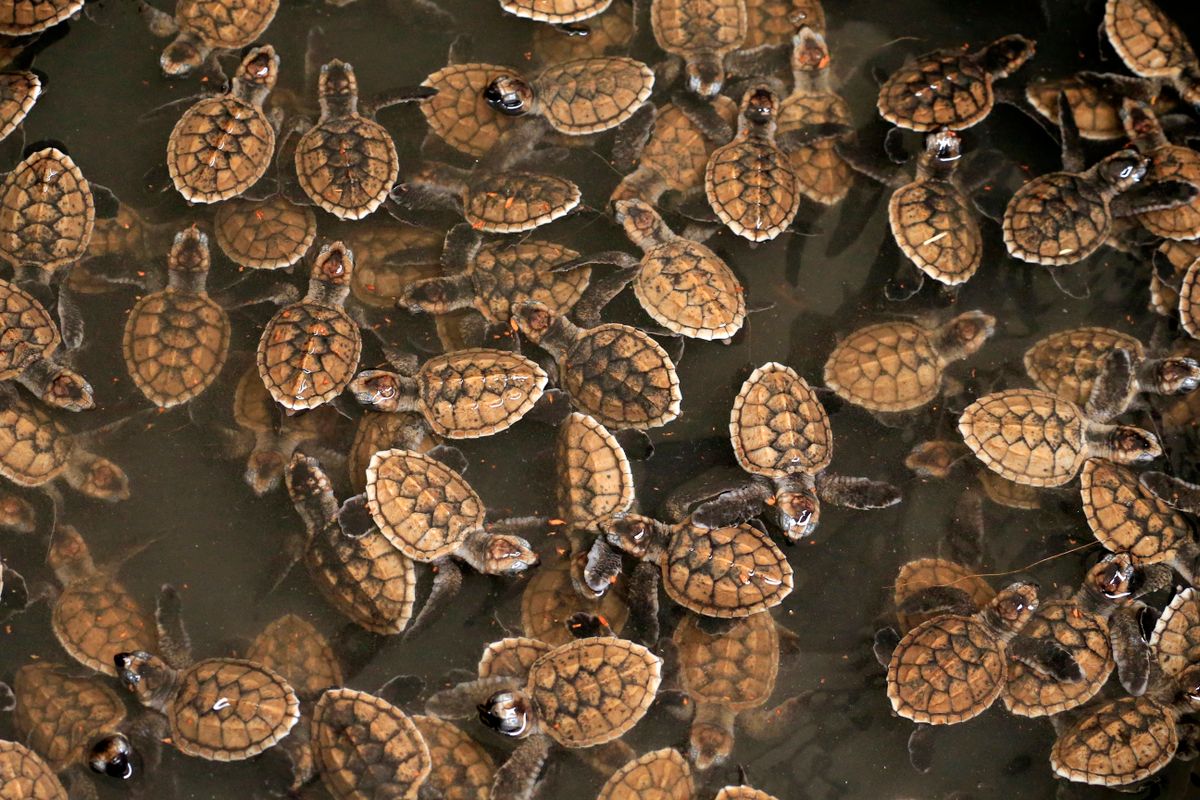
Most hatcheries display a selection of hatchlings, sometimes just hours old, in shallow tanks before release. This is genuinely one of the few places on the south coast where you can see a baby sea turtle at close range in daylight.
Ask about handling policy before picking one up. Minimal handling, and only by staff rather than visitors, is generally the better sign.
2. Learn about the species nesting on this coast
Sri Lanka's south coast is nesting habitat for several species of sea turtle, including green, olive ridley, hawksbill, loggerhead and leatherback turtles. A good hatchery will explain which species are commonly seen locally, what threatens them, from beach development to egg poaching to plastic pollution, and what the conservation work is actually trying to achieve.
3. Join a hatchling release if the timing works
If hatchlings are ready for release during your visit, many hatcheries allow visitors to help release them into the sea at the shoreline. This is usually done at dusk, when temperatures are cooler and predator risk from birds is somewhat reduced.
Timing is not guaranteed, since it depends entirely on when eggs were collected and how far along incubation is. If this is the part of the visit you most want to see, ask the hatchery directly whether a release is likely on the day you plan to visit.
4. See turtles recovering from injury, if the hatchery runs a rehabilitation program
Some hatcheries in this area also care for turtles injured by boat strikes, fishing net entanglement or illness, alongside their egg protection work. If this interests you, ask specifically, since not every hatchery runs this kind of program.
How long should you stay at Kosgoda?
For most visitors, thirty minutes to an hour is enough for a hatchery visit.
A simple stop could look like this:
Arrive in the afternoon.
Walk through the hatchery and see the different tanks and life stages.
Ask staff about the conservation approach and current release schedule.
Stay for a hatchling release at dusk if timing allows, or continue on toward your next stop.
This works well as a stop between Bentota and Hikkaduwa or Galle, rather than something you build a full day around.
When is the best time to visit Kosgoda?
Kosgoda hatcheries generally operate year-round, since turtles nest on this coast across most of the year rather than in one short season, though nesting activity and hatchling numbers do vary by month and by species.
If a hatchling release is important to you, it is worth calling ahead directly to ask what is likely to be happening on the specific day you plan to visit, since this depends on the hatchery's current incubation schedule rather than a fixed calendar.
How to get to Kosgoda
Kosgoda sits directly on the coastal route between Bentota and Hikkaduwa, making it an easy stop rather than a detour.
From Bentota
Kosgoda is close to Bentota, generally 15 to 20 minutes by car or tuk tuk.
From Hikkaduwa
Kosgoda is around 20 to 25 minutes from Hikkaduwa by car or tuk tuk.
From Colombo
Kosgoda is roughly 85 to 90 kilometres south of Colombo, about an hour and a half to two hours by car depending on traffic. The coastal train also runs through this area.
From Ambalangoda
Kosgoda sits close to Ambalangoda as well, generally 10 to 15 minutes away, which makes it easy to combine both stops in a single half-day if you are travelling this stretch of coast.
Kosgoda or Rekawa: which should you choose?
If you can only do one, the choice comes down to what kind of experience you actually want.
Choose Rekawa for a wild, night-time experience watching nesting turtles on the beach in their natural behaviour, with no captivity involved.
Choose Kosgoda for a daytime stop where you can see hatchlings up close and learn about active conservation work, provided you choose a hatchery with genuinely responsible practices.
If your route allows it, doing both gives you a fuller picture: the wild nesting process at Rekawa, and the protection and hatching side of the story at Kosgoda.
Where to stay near Kosgoda
Kosgoda has limited standalone tourist accommodation compared to Bentota or Hikkaduwa on either side of it.
Most travellers base themselves in Bentota or Hikkaduwa and visit Kosgoda as a short stop along the route rather than staying in the town itself.
What should you bring?
Keep it simple for a stop like this.
Bring cash for the entry fee, since smaller operations do not always take cards. If you plan to stay for a dusk hatchling release, bring a light layer, since the coast cools noticeably once the sun goes down.
A few things I would know before visiting Kosgoda
Do your research on the specific hatchery before you go.
Standards vary meaningfully between operations in this area, and a few extra minutes checking reviews or asking direct questions can make a real difference to what your visit actually supports.
Do not expect a guaranteed hatchling release.
Timing depends on the current incubation schedule, not a fixed show time.
Do not encourage excessive handling.
If staff or other visitors are handling hatchlings more than seems necessary, that is worth noticing, and it is fine to ask why.
Do not treat this as a substitute for Rekawa if a wild, natural experience is specifically what you are looking for.
They are genuinely different things.
Is Kosgoda worth adding to your Sri Lanka itinerary?
I think so, provided you choose the hatchery carefully rather than picking the first one you pass.
Kosgoda gives you something Rekawa cannot: a daytime, close-up look at hatchlings and a direct conversation with the people doing the conservation work, at a point on the coast you are likely passing through anyway between Bentota and Hikkaduwa.
Ask the right questions when you arrive.
Then stay for the release, if the timing lines up.
Frequently asked questions about Kosgoda Turtle Hatchery
Is Kosgoda Turtle Hatchery ethical?
It depends on the specific hatchery. The strongest programs focus on protecting eggs from poaching, release hatchlings quickly rather than keeping them in tanks long-term, and limit handling. It is worth asking these questions directly before choosing where to visit.
What is the difference between Kosgoda and Rekawa Beach?
Rekawa is a night-time visit to watch wild turtles nest naturally on the beach, with no eggs collected or turtles held. Kosgoda is a daytime hatchery visit where collected eggs are protected and hatched under controlled conditions before release.
How far is Kosgoda from Bentota?
Kosgoda is close to Bentota, generally 15 to 20 minutes by car or tuk tuk.
How far is Kosgoda from Hikkaduwa?
Kosgoda is around 20 to 25 minutes from Hikkaduwa by car or tuk tuk.
Can you release baby turtles at Kosgoda?
Some hatcheries allow visitors to help release hatchlings at dusk, but this depends on the current incubation schedule. Call ahead to check if a release is likely on the day you plan to visit.
What species of sea turtle nest on Sri Lanka's south coast?
Green, olive ridley, hawksbill, loggerhead and leatherback turtles all nest along this coastline, though the mix and frequency varies by location and time of year.
Final thoughts
Kosgoda will not give you the same experience as a night on Rekawa Beach, and it is not trying to.
What it offers instead is a close, daytime look at the earliest and most vulnerable stage of a sea turtle's life, and a direct chance to ask the people working with them what their conservation approach actually involves.
Ask the questions.
Choose carefully.
Then stay for the release, if you can.