
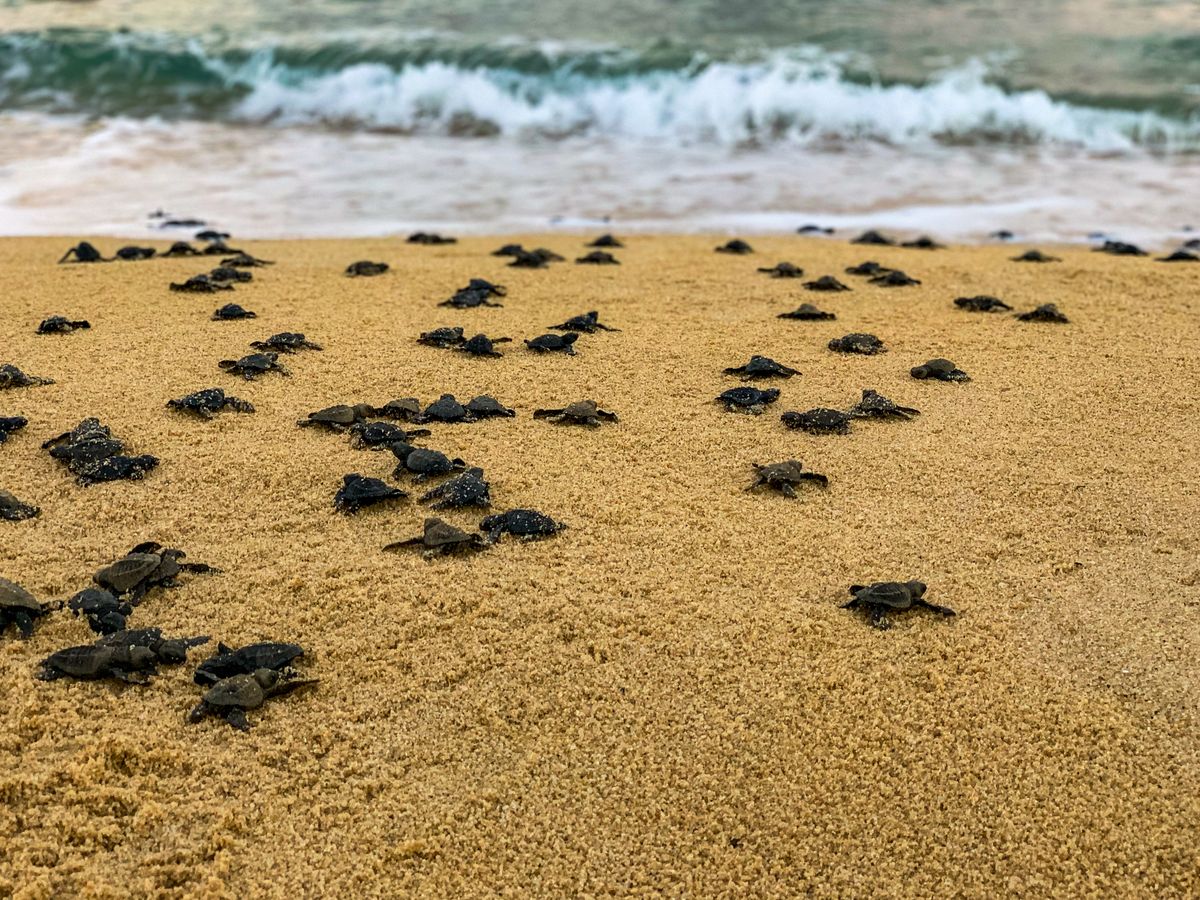
Rekawa Beach, about 8 kilometres east of Tangalle, is one of the most important sea turtle nesting sites in Sri Lanka and one of the few places in the country where you can watch turtles come ashore to nest in an ethical, conservation-led setting. Five of the world's seven sea turtle species nest here: green, hawksbill, loggerhead, olive ridley, and leatherback. Watching a turtle come out of the ocean and lay her eggs on a dark beach under a night sky is one of the genuinely extraordinary things available on the south coast.
Who runs the experience. The Rekawa Turtle Watch is run by the Turtle Conservation Project, a non-profit organisation that has been working at Rekawa since 1996. Former egg poachers from the local community were trained and employed as nest protectors and research assistants, which is the reason the programme works: the people who once threatened the turtles are now the ones protecting them. The entrance fee goes directly to supporting the project and the community. Avoid any touts or unofficial operators who offer to take you to see baby turtles for a tip. This has become a problem at some beaches in Sri Lanka and is harmful to the animals. Rekawa's official programme is the right way to do this.
When to go. The peak nesting season is April through July, when 5 to 15 turtles can come ashore in a single night. Outside this window, turtles still nest year-round but in smaller numbers. In the low season from October through January, you might see 1 to 2 turtles during a visit. Full moon nights from January through April are particularly good times. The turtle watch is open every day from 8pm to 1am. Arrive by 9pm at the latest to avoid missing early arrivals.
What the visit involves. You arrive at the Turtle Watch Visitors Centre, pay the entrance fee, and receive a briefing. While you wait, there is a documentary about the turtles and the conservation project running in the centre. Guides use red torches that do not disturb the turtles — white light and flash photography are prohibited at all times. When a nest protector on the beach spots a turtle coming ashore, you are called to follow the guide quietly. You observe the turtle during the egg-laying process from a respectful distance. The whole experience from arrival to sighting can take one to several hours, and sightings are not guaranteed, though the project refunds your ticket if no turtle appears by 11.30pm.
What it costs. Entry is 1,500 rupees per adult and 500 rupees per child. These are current prices as of 2024 and 2025. The project refunds your fee if no turtle comes ashore during your visit.
Practical things to know. Rekawa is a rural village and most local people do not speak English, though the guides have a working command of the language. Dress modestly as this is a conservative local community: covered shoulders and knees are recommended, especially for women. Wear dark, non-reflective clothing to reduce the chance of startling the turtles. Bring insect repellent. There is a toilet on site. Cash only. The nearest ATM is in Tangalle town.
Getting there. From Tangalle, Rekawa is about 15 minutes by tuk-tuk. The fare should be around 500 to 800 rupees one way. Confirm the return pickup before your driver leaves, as tuk-tuks are harder to find late at night in a rural area. Many visitors arrange a round trip with the same driver and agree a waiting fee.