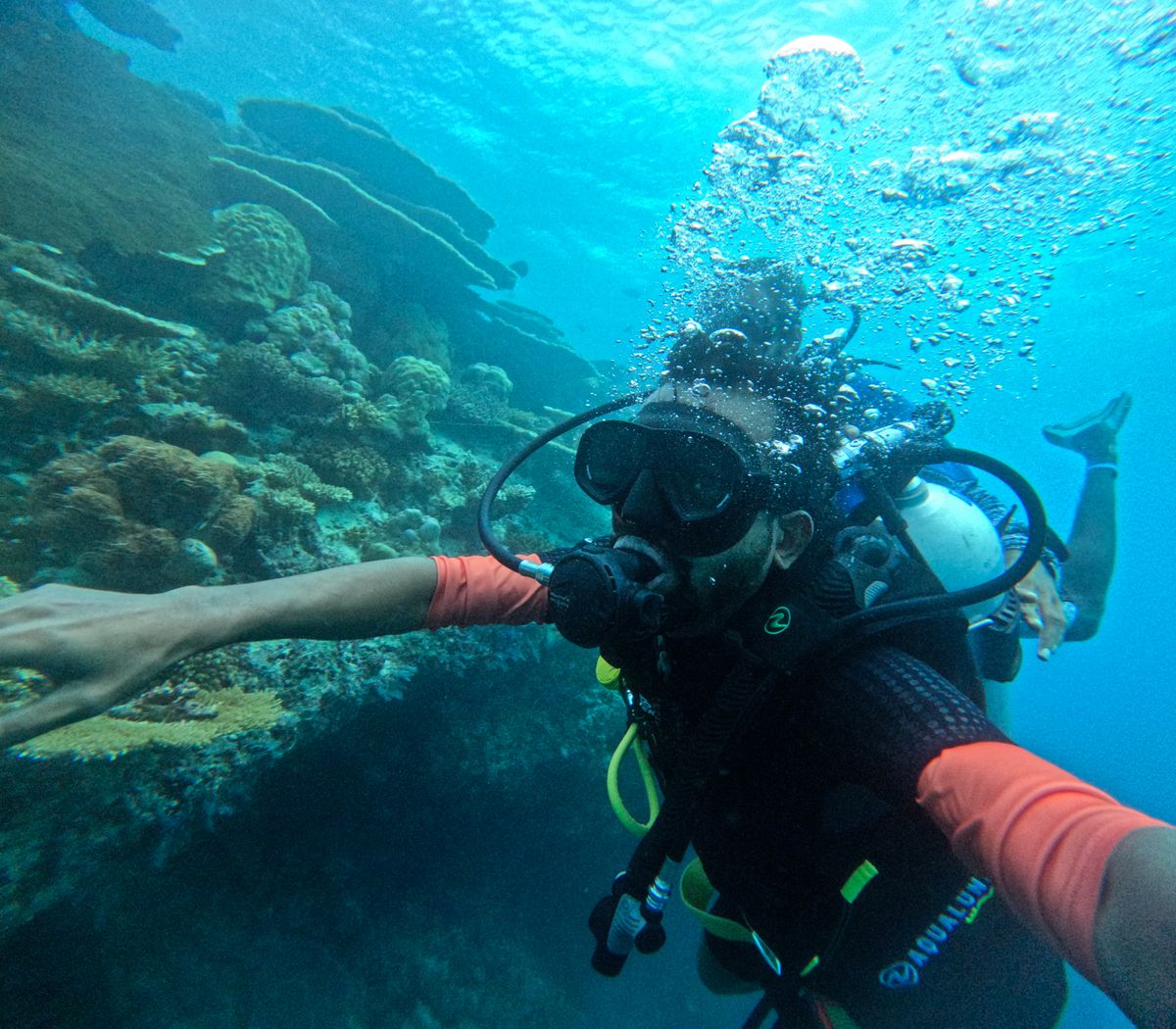
The waters around Galle and Unawatuna are among the most varied diving environments on the south coast. Within a short boat ride from either base you have colonial shipwrecks sitting on sandy sea floors, a protected marine sanctuary reef with close to 500 species of fish, and shallow beginner-friendly sites inside the bay where the sea is almost always calm. The area suits every certification level from complete beginners to advanced divers chasing depth and wrecks.
When to dive. The season for diving around Galle and Unawatuna runs from November through April, the same window as the rest of the south coast dry season. Visibility is at its best from December through March, often reaching 20 metres on good days. During the southwest monsoon from May to October, conditions become rougher and most operators close or run limited trips. Divinguru Unawatuna, the main operator in the area, is open from 15 October to 10 April. If you are coming specifically to dive, plan your trip within this window.
The dive sites. The area has a mix of reef dives, rock formations, and shipwrecks at varying depths and difficulty levels.
Rumassala Marine Sanctuary. The most important dive site in the area and the one that makes this stretch of coast distinctive. Rumassala is a protected marine sanctuary declared in 2003, covering the reef system around the headland between Galle Fort and Unawatuna. The reef runs to around 8 metres depth and hosts the highest marine biodiversity recorded in any Sri Lankan habitat: over 490 species of reef fish and hundreds of invertebrate species. 25 of Sri Lanka's 36 species of butterflyfish have been recorded here, which marine biologists use as a sign of a healthy reef ecosystem. The coral was bleached significantly by the 1997 El Nino event but has been slowly recovering since. At the shallower sections the reef is suitable for snorkellers. For scuba divers, the deeper sections and the rock formations around the headland offer more to explore, with moray eels, stingrays, nudibranchs, turtles, and reef fish in good numbers.
SS Rangoon. The most famous dive site near Galle. A British cargo ship that sank well over a century ago, now resting upright on a sandy plain in about 30 metres of water directly in front of Galle Fort. The wreck is encrusted with soft corals and home to schools of blue-striped snappers, rabbitfish, red soldierfish, and blue-fin trevally. Advanced Open Water certification is recommended given the depth. The upright sailing position of the hull makes it an unusual and photogenic wreck to explore.
SS Orestes. A second colonial-era wreck lying at around 22 metres near Galle harbour. Soft corals and schooling sweetlips are the highlights here. Less frequently dived than the Rangoon, which means it tends to be quieter.
Galle Shipwreck. Shallower than the Rangoon at around 18 metres, making it accessible to Open Water certified divers without the advanced qualification. Barracudas, trevallies, and various ray species are regularly seen here.
Lord Nelson Wreck. A shallow wreck in the Unawatuna bay area, accessible to beginners. Colourful reef fish and nudibranchs are the attraction rather than dramatic architecture. The depth makes it relaxed and unhurried.
Napoleon Reef. Named for the Napoleon wrasse that are regularly spotted here, Napoleon Reef is a biodiversity-rich site with parrotfish, snappers, and vibrant coral gardens. One of the more reliably entertaining reef dives in the area for variety of fish life.
Goda Gala Diyamba. A deeper reef featuring coral formations, stingrays, and occasional reef sharks. One of the more advanced reef options in the area.
Operators. There are three main PADI-certified operators working the Galle and Unawatuna area.
Divinguru Unawatuna is the most established, operating as a PADI 5-Star IDC Dive Resort and a multiple PADI award winner. They run fun dives, beginner dives, and the full range of certification courses. Open 15 October to 10 April. They are the only operator in the area offering free enriched air nitrox. Maximum 5 divers per guide.
Submarine Diving Centre in Unawatuna is a family-run operation founded by the Koralage family, offering scuba diving alongside surfing, snorkelling, jet skiing, and whale watching. Good for groups who want multiple activities in one place.
Sun Diving Center is a Sri Lankan family-run PADI 5-Star centre that has been operating since 2014. Strong on personalised instruction and safe diving practices.
What it costs. A two-tank fun dive for certified divers runs approximately $60 to $90 USD per person including equipment rental. A PADI Open Water beginner course runs approximately $300 to $380 USD for the full certification over three to four days. Single introductory dives for non-certified divers, known as Discover Scuba Diving, start from around $50 to $70 USD. All prices include equipment.
Who it suits. The Galle and Unawatuna area is genuinely good for beginners. The bay is sheltered, the shallow sites are calm, and the operators are experienced with first-time divers. For certified divers, the shipwrecks and the Rumassala sanctuary provide more than a few days of interesting diving. Advanced divers looking for depth, current, and large pelagic species will find more at dedicated dive destinations like Trincomalee on the east coast or Kalpitiya on the northwest coast, but the wrecks near Galle are a draw in their own right.