The south coast has quietly become one of the more developed digital nomad destinations in Asia, and it deserves more credit than it usually gets. It is not Bali. The infrastructure is not as mature, the wifi is not as universally reliable, and the community is smaller. But the cost of living is lower, the beaches are less crowded, and if you get the right setup in the right town, you can work well and live comfortably for a fraction of what you would spend in most Southeast Asian alternatives.
The honest wifi picture. Sri Lanka ranked 127th globally for fixed broadband internet speed as of early 2025. That number sounds bad, but in practice the coworking spaces and coliving setups in Weligama and Ahangama have invested in dedicated fibre connections that are significantly faster and more stable than the national average. The issue is not the specific coworking spaces. The issue is that outside of dedicated work setups, wifi at guesthouses and cafes is inconsistent. If your work depends on a reliable connection for video calls and uploads, base yourself in a space built for it rather than relying on a beachfront guesthouse router. Pick up a local SIM card on arrival from either Dialog or Mobitel, both of which offer reliable 4G coverage on the south coast, and use mobile data as a backup.
Weligama is the main hub. It has the most developed coworking and coliving infrastructure of any town on the south coast. Outpost Weligama is the most established setup: a beachfront coliving property with fibre WiFi, dedicated desks, private phone booths for calls, and a built-in community of other remote workers and surfers. It functions well as both a place to work and a place to meet people. Sugar Hostel Weligama and Focus Hub are the other confirmed coworking options in the town, with different vibes and price points. Weligama suits nomads who want to be social, surf in the morning, and have a structured work environment during the day.
Ahangama is the alternative for people who want to work in a quieter setting. Focus Hub Ahangama is a confirmed dedicated coworking space with air conditioning, fast internet, comfortable chairs, and good coffee. It is close to the beach and the surf breaks, but the town itself is calmer and less social than Weligama. Colive Ahangama is the coliving option here, with bikes, a pool, and desks in every room. Ahangama suits nomads who want to get a lot of work done and do not need a social scene in the evenings.
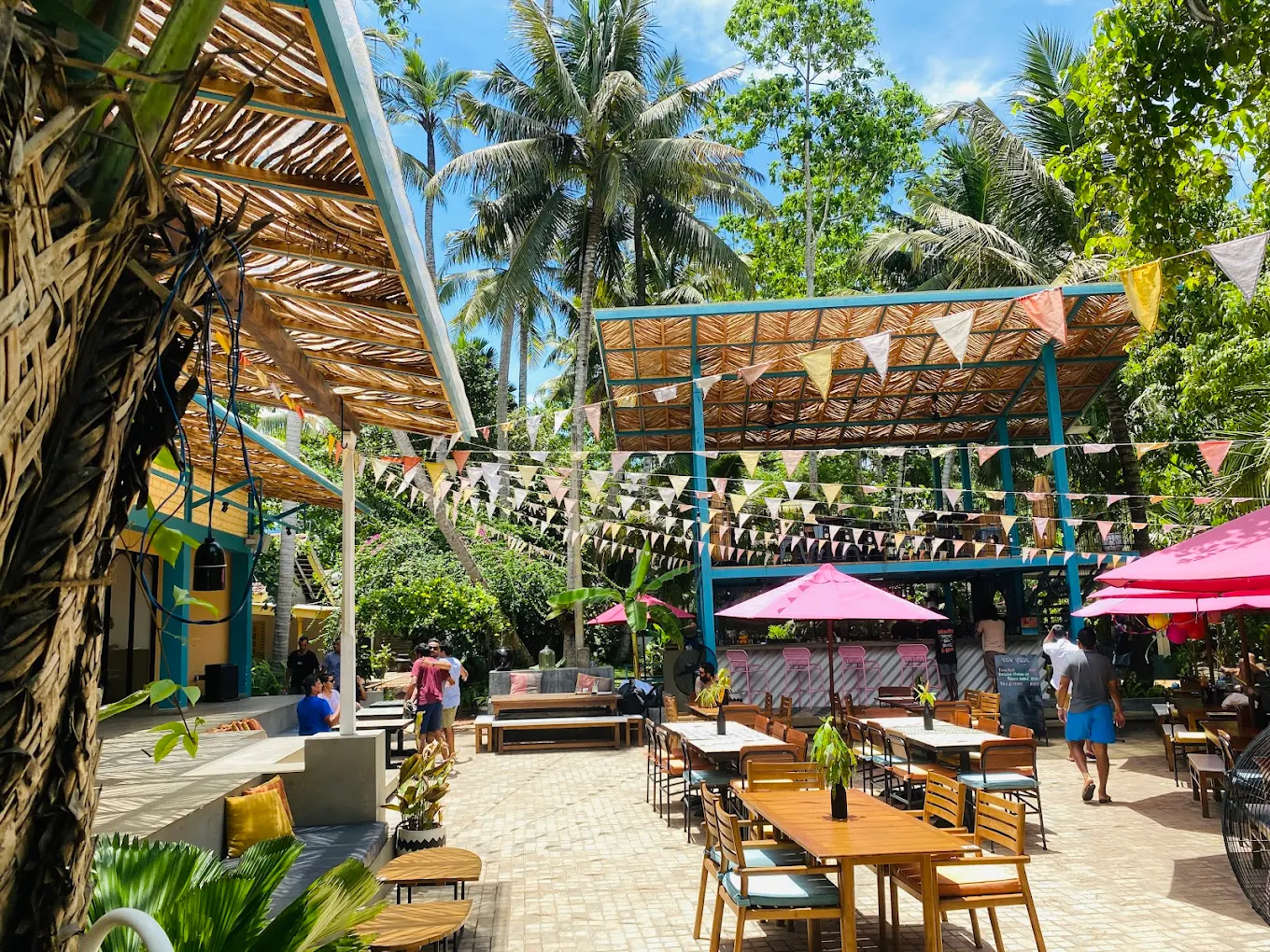
Hiriketiya is worth mentioning for short stays. It has a coworking-capable cafe with stable wifi that is free to use when you order food or drinks. Hiriketiya does not have a dedicated coworking space, but it has a calm, focused atmosphere that some people find genuinely productive. It works better for writers, designers, and people whose work does not require constant video calls than for people who need reliable bandwidth for data-heavy tasks.
Cost of living. A realistic monthly budget for a comfortable nomad existence on the south coast, covering accommodation in a private room at a coliving or guesthouse, meals mostly from local restaurants with occasional cafe coffees, and basic transport, is around $800 to $1,400 USD per month. Accommodation is the biggest variable. A private room at a dedicated coliving like Outpost costs more than a guesthouse room in town, but includes the coworking setup and community. Eating local food keeps costs low. A rice and curry lunch from a local spot costs under $2 USD. A specialty coffee at a beachside cafe costs around $3 to $5.
Visa situation as of 2026. Sri Lanka currently issues 30-day visas on arrival that can be extended. Long-stay options require more planning. Check current visa regulations before you book, as these have changed several times in recent years and the most accurate information will be on the Sri Lanka immigration official site rather than any travel blog, including this one.