Whale Watching in Mirissa, Sri Lanka: Best Time, Prices & What to Expect
Whale watching is one of the main reasons people visit Mirissa, particularly between November and April. Blue whales are the main attraction, but trips can also include spinner dolphins, sperm whales and other marine life. The experience can be incredible, but it is still wildlife watching: sightings aren't guaranteed, sea conditions change, and the operator you choose can make a big difference.
What is the best time for whale watching in Mirissa?
The best time for whale watching in Mirissa is generally January to March. The wider whale-watching season runs from November to April, when conditions along Sri Lanka's south coast are generally more suitable for boat trips. Sri Lanka Tourism also lists November to April as the whale and dolphin watching season in the south.
November marks the beginning of the season, although sea conditions can still vary. December is usually a good month to go, but the Christmas and New Year period can be noticeably busier.
January, February and March are generally the months most people should consider if whale watching is a priority. February is particularly attractive because it sits in the middle of the main season, although there is never a month when a whale sighting is guaranteed.
By April, the season is beginning to wind down and conditions can become less predictable. From May through October, the southwest monsoon generally makes the sea rougher, so Mirissa is not the first place we'd choose specifically for whale watching during these months.
Mirissa whale watching season at a glance
November: The season begins, but conditions can still be variable.
December: A good time to go, although the holiday period can be busy.
January: One of the stronger months for whale watching.
February: Generally one of the best months to plan a trip.
March: Still a strong month, although conditions can gradually change.
April: The season starts winding down.
May–October: Generally not the best period to choose Mirissa specifically for whale watching.
The important thing to remember is that whale watching is wildlife watching. Even in February, you can have a day when the whales simply aren't where the boats expect them to be.
Can I watch whales from Mirissa Beach?
You can enjoy Mirissa Beach without going on a boat, but you should not expect to properly whale watch from the beach.
The whales people come to Mirissa to see are offshore. To have a realistic chance of seeing blue whales, you need to join a boat trip from Mirissa Harbour and travel out into deeper water.
Most whale-watching trips leave early in the morning, usually around 6:30am, from Mirissa Fisheries Harbour. Sri Lanka Tourism puts the typical trip duration at around three to four hours, depending on sea conditions.
You might occasionally spot something from the coastline if you're very lucky, but that is completely different from going out on the water with a crew looking specifically for whales.
Is whale watching in Mirissa worth it?
Yes, if seeing whales in the wild is something you genuinely want to experience. Just don't book a trip expecting an aquarium-style encounter or a guaranteed close-up photograph.
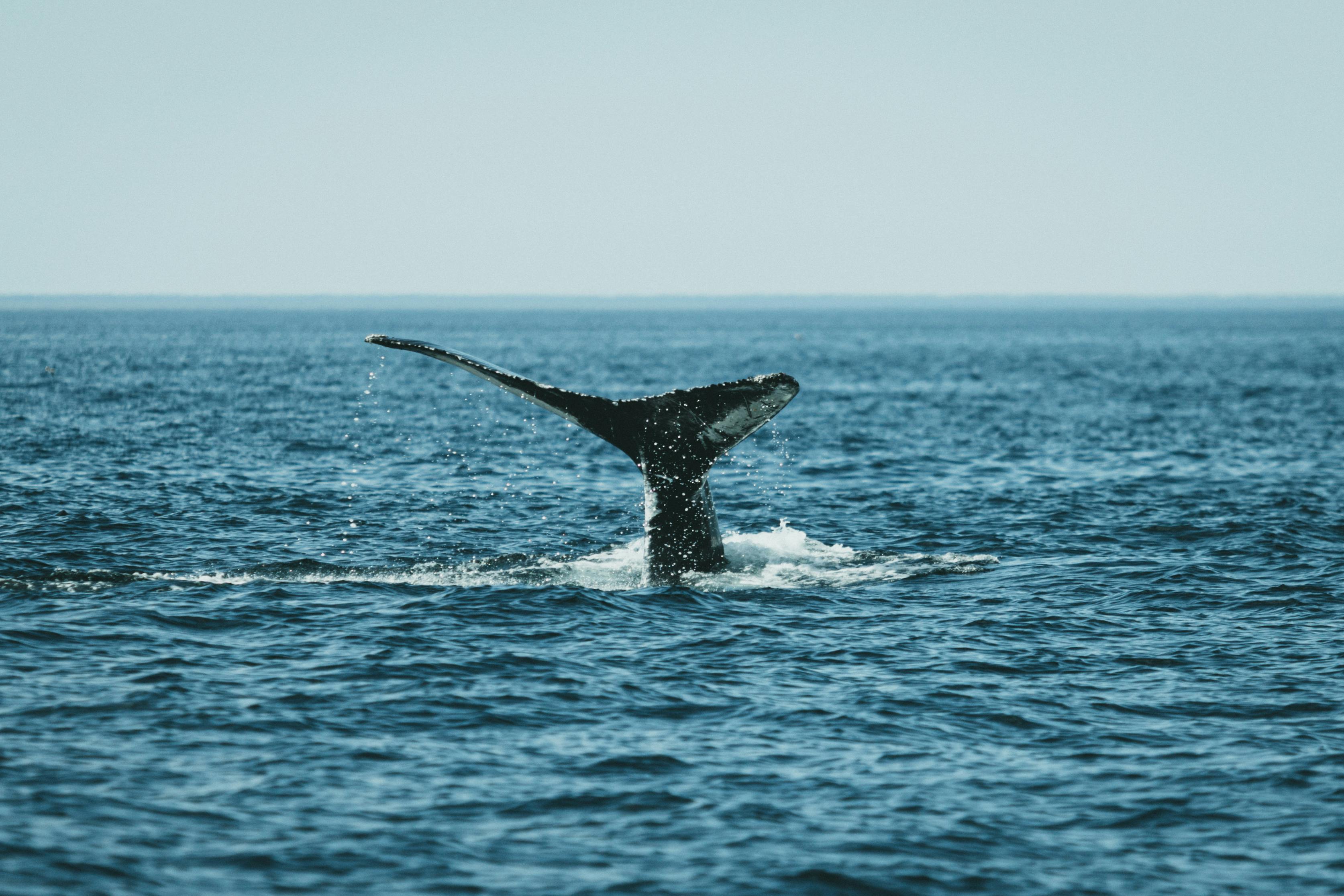
A blue whale is enormous, but seeing one in the open ocean is often more subtle than people expect. You may first notice a blow in the distance, followed by part of the whale's back as it surfaces before disappearing beneath the water again.
That can sound underwhelming until you're actually standing on a boat watching the largest animal ever known to have lived move through the ocean.
The trip can also be about more than blue whales. Dolphins are commonly encountered, and sperm whales and other cetaceans can also be seen depending on the day.
When whale watching in Mirissa may not be worth it
Whale watching may not be for you if you get severe seasickness, dislike spending several hours on a boat, or are expecting guaranteed sightings.
The sea can also be choppy even during the main season. You can spend a considerable amount of time looking at the horizon before anything happens. That's normal.
If you go, it's better to think of the trip as a wildlife excursion rather than a guaranteed whale encounter.
How much does whale watching cost in Mirissa, Sri Lanka?
The cost of whale watching in Mirissa varies depending on the operator, boat and what is included. As a rough guide, around USD $45–$70 per person is a reasonable range for many current shared tours, although prices can change between operators and seasons. A recent Sri Lanka tourism visitor-management report puts standard whale-watching tours at around USD $50–$60 per person.
Private boats cost considerably more, particularly if you want the boat to yourself or are travelling as a group.
What is usually included in the price?
Depending on the operator, your ticket may include:
- The whale-watching boat trip
- Crew or guide
- Life jacket and safety equipment
- Drinking water
- Breakfast or light refreshments
- Pickup from your accommodation
Don't assume that everything is included. Ask before paying, particularly if you are comparing a very cheap tour with a more expensive one.
A cheaper ticket is not necessarily better value. The number of passengers, condition of the boat, experience of the crew and approach to wildlife can have a much bigger effect on your morning than saving a few dollars.
What can you see on a whale-watching trip in Mirissa?
Blue whales are the main attraction, but they are not the only animals you may encounter.
Blue whales
Blue whales are the species most people are hoping to see around Mirissa. They are the largest animals known to have ever lived, and seeing one in open water is very different from seeing a whale in a documentary or photograph.
They don't necessarily put on a dramatic show. A typical encounter may involve spotting the whale's blow, watching it surface and seeing its back before it dives again.
Dolphins
Spinner dolphins are another common highlight of trips from Mirissa. They often travel in groups and can be much more active around boats than whales, sometimes swimming alongside the vessel or moving rapidly through the water.
Other whales and marine life
Sperm whales and other cetaceans can also be encountered, but what you see depends entirely on the conditions and where the animals happen to be that day. This is why a responsible operator should never promise you a specific list of animals.
What is a whale-watching trip from Mirissa actually like?
Whale-watching trips start early. Most boats leave Mirissa Harbour around 6:30–7:00am, so you'll usually need to be awake well before that. Sri Lanka Tourism lists around 6:30am as the typical morning departure time.
The first part of the trip is usually spent travelling offshore and scanning the water. Don't be surprised if it feels like you're doing a lot of waiting. Finding wild whales is not as simple as following a fixed route to a particular spot.
Once a whale is spotted, the crew will usually slow the boat and try to position passengers where they can see the animal.
The total trip generally takes around three to five hours, depending on sea conditions and how far the boat has to travel.
And yes, the sea can be choppy.
If you are prone to seasickness, take it seriously. A small breakfast is fine. A large one is not.
How should I choose a whale-watching operator in Mirissa?
The operator you choose can make a surprisingly big difference to the experience.
Don't choose a boat simply because it is the cheapest one you can find. Ask how many people they take, what happens if there are no sightings, what is included in the price and how they approach whales.
Questions to ask before booking
How many passengers will be on the boat?
A boat packed with passengers can make it difficult to get a clear view when a whale surfaces.
What happens if no whales are seen?
Some operators offer another trip or another form of compensation, while others do not. Ask before you book.
What happens if the sea is too rough?
A reputable operator should be clear about cancellation and rescheduling arrangements.
What is your approach to whale watching?
Look for operators who talk about keeping appropriate distances, avoiding chasing animals and following the relevant regulations.
What is included in the price?
Confirm whether pickup, breakfast, water and other extras are included.
Is whale watching in Mirissa ethical?
This is worth thinking about before you book.
Whale watching can become problematic when too many boats converge on the same animal. Sri Lanka Tourism has previously highlighted the need to regulate whale-watching activity in Mirissa, with Coast Guard personnel monitoring operators and tourists to ensure the relevant marine-mammal regulations are followed.
From a passenger's perspective, overcrowding is also frustrating. When several boats surround the same whale, you can end up watching the animal through a wall of other boats instead of having a quiet view.
What does responsible whale watching look like?
Choose an operator that:
- Gives whales space rather than trying to get as close as possible
- Does not chase or cut across the path of an animal
- Follows Sri Lanka's marine-mammal regulations
- Takes passenger safety seriously
- Is willing to accept that wildlife does not always cooperate
- Doesn't treat getting the perfect photograph as more important than the animal
The best whale-watching experience isn't necessarily the one where a boat gets closest to a whale. It is the one where you can watch the animal without contributing unnecessarily to the disturbance around it.
What should I take whale watching in Mirissa?
You don't need to bring much, but a few things will make the trip more comfortable.
- Sunscreen
- Sunglasses
- Hat
- Drinking water
- Camera or phone
- Waterproof bag for electronics
- Light jacket or cover-up
- Seasickness medication if you need it
The sun can become strong once you're offshore, while the boat can feel surprisingly cool early in the morning.
If you know you get seasick, don't wait until the boat is already moving before thinking about it.
Are whale sightings guaranteed in Mirissa?
No. Whale sightings are never guaranteed.
Mirissa has a strong reputation for whale watching, but these are wild animals moving through a large area of ocean. Weather, sea conditions, food availability and the location of the whales on any particular morning can all affect what you see.
A responsible operator should be honest about this rather than promising that you will definitely see a blue whale.
Frequently Asked Questions About Whale Watching in Mirissa
What is the best time for whale watching in Mirissa?
The best time is generally January to March, while the wider whale-watching season runs from November to April.
Can I watch whales from Mirissa Beach?
Not reliably. The whales are offshore, so you need to join a boat trip from Mirissa Harbour for a realistic chance of seeing them.
Is whale watching in Mirissa worth it?
Yes, particularly if seeing a blue whale in the wild is something you want to experience. Just remember that sightings are not guaranteed and the sea can be rough.
How much does whale watching cost in Mirissa?
Prices vary by operator and boat, but around USD $45–$70 per person is a reasonable current guide for many shared tours. Private trips cost more. Always confirm the current price and what is included before booking.
What time do whale-watching boats leave Mirissa?
Most morning trips leave around 6:30–7:00am from Mirissa Harbour.
How long does whale watching in Mirissa take?
Most trips take around three to five hours, depending on sea conditions and how far the boat needs to travel.
What whales can you see in Mirissa?
Blue whales are the main attraction, while sperm whales and other cetaceans may also be encountered. Spinner dolphins are also commonly seen on trips.
Is whale watching in Mirissa safe?
Whale-watching boats operate under Sri Lankan marine and safety regulations, and Sri Lanka Tourism states that registered boats are equipped with safety equipment such as life jackets, life rings and communication equipment. As with any offshore boat trip, conditions can change, so choose a reputable operator and follow the crew's safety instructions.
Final Thoughts
Whale watching in Mirissa can be an incredible experience, but it is best approached with realistic expectations.
Go during the main season, preferably between January and March. Leave early. Prepare for a few hours on the water. Take something for seasickness if you need it. And most importantly, choose an operator that puts the welfare of the animals and the safety of passengers ahead of getting as close as possible.
If you see a blue whale, you'll probably remember the moment for a long time.
If you don't, that doesn't necessarily mean the trip was a failure. You were still out on the Indian Ocean looking for one of the largest animals ever to exist in the place where they actually live.