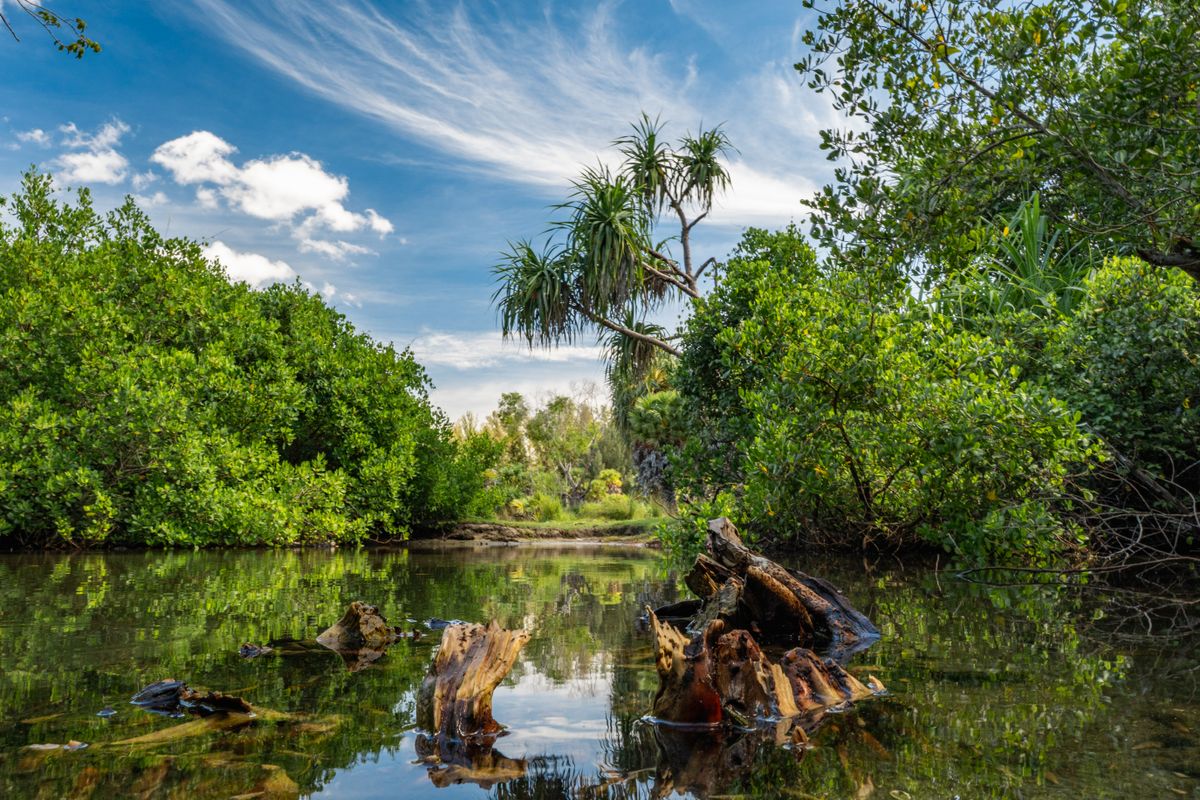
Most people who visit Hikkaduwa spend their time on the beach, on the reef or in a bar. A few kilometres inland there is a very different side to the town: a quiet lagoon with mangrove tunnels, kingfishers on the branches and a monk's island in the middle.
That is Rathgama Lake. It is one of the easiest and calmest paddles on the south coast, and it also offers something more questionable: a "fish therapy" experience that is worth thinking twice about.
This guide covers what Rathgama Lake is, what a kayak trip involves, which birds and animals you can see, the crocodile question, how to get there, and an honest look at fish therapy.
What is Rathgama Lake?
Rathgama Lake, also spelled Ratgama, is a brackish lagoon in Galle district, a short way inland from Hikkaduwa. The villages of Dodanduwa, Rathgama, Katudampe and Berathuduwa lie around its edges. A sandbar separates it from the sea and limits how much salt water gets in, and mangroves fringe the water and the small islets.
The lake has four islands: Polgasduwa, Matiduwa, Mahaduwa and Parappuduwa. Polgasduwa, the coconut island, is home to a forest hermitage, and Parappuduwa is known as the nuns' island.
It is quiet, shallow and sheltered, which is exactly why kayaking here suits beginners.
Kayaking on Rathgama Lake
Several operators run guided kayak trips from Hikkaduwa and Dodanduwa. A typical set-up looks like this:
- Length: about two hours, plus a short lesson.
- Included: a kayak, paddle, life jacket, a waterproof phone bag or case, a short safety briefing and often snacks and a welcome drink.
- Lesson: one listing offers a free 15-minute lesson before you set off.
- Route: across the open water and into the mangrove channels, with views of Dodanduwa harbour from the lake.
Check what is included, because details and prices vary between operators.
Best time of day
Early morning and evening are best. A sunrise tour, roughly 6:00 to 9:00 am, has the calmest water and the best chance of seeing wildlife. A sunset tour typically ends with views over Dodanduwa harbour and the sea. Operators say both run year round.
What you can see
Birds and animals are the real attraction. Visitors and operators commonly report:
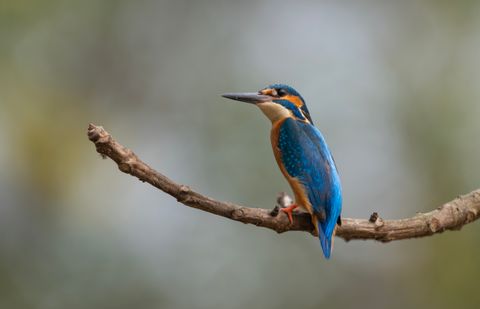
- Birds: kingfishers, purple herons, grey herons, little egrets, little cormorants, Indian shags and brahminy kites. Migratory birds visit in the dry months.
- Reptiles: water monitor lizards sunning themselves on the banks.
- Mammals: fruit bats and monkeys.
- People: traditional fishermen working the lagoon.
If birds are your thing, read our birdwatching hub for the other sites on the coast.
Polgasduwa and the island hermitage
Polgasduwa is home to hermit monks, and it is a place of meditation, not a tourist stop. If you want to visit, ask for permission first and dress modestly. Some visitors have a dugout canoe taken across. Do not land without being invited, and keep your voice low.
What about crocodiles?
Sources disagree. One traveller's tip says to be cautious of crocodiles during water activities on the lake. A kayak operator's guide says the lagoon is free of them. We cannot settle that from the outside, and estuaries in Sri Lanka can be home to crocodiles.
The sensible approach is simple. Do not swim in the lagoon, keep your hands and feet inside the kayak, follow your guide and ask a local about recent sightings.
Fish therapy at Rathgama: our honest view
Some visitors are offered a "fish therapy" experience near Rathgama Lake, sometimes bundled into a kayak and lagoon tour. In a fish therapy session you dip your feet into water where small fish nibble the dead skin from them. Some guides describe it as rejuvenating for the skin.
We could not verify how it is run at Rathgama. We do not know which fish are used, whether they are wild lagoon fish or kept in tanks, or how the water is managed. So here is what is known about fish pedicures in general, and what to ask.
What the wider evidence says
- Hygiene. Fish pedicures are banned in a number of US states and Canadian provinces because regulators consider them unsanitary. Tanks and communal water are hard to disinfect between customers.
- Infection risk. The UK Health Protection Agency judged the risk of infection from fish spas to be very low if good hygiene is followed, but it also set out cases where people should avoid them, such as cuts, recent shaving or waxing and some skin conditions.
- Welfare. In commercial spas, the usual fish, Garra rufa or "doctor fish", is said to nibble skin mainly when it is deprived of its normal food. Fish are transported long distances, and some stock has been overfarmed. Health bodies have also flagged cases where a toothed look-alike species was used.
- Evidence of benefit. The skin-smoothing effect is superficial, and dermatologists generally do not recommend it.
If you still want to try it, ask
- What species of fish are these, and are they wild or kept in tanks?
- Where do the fish come from, and what do they eat?
- Is the water changed between customers?
- Are there any rules about cuts, shaving or waxing?
If the operator cannot answer, that is your answer. Our own advice is to skip it, and spend the time kayaking instead. Our volunteering guide and Kosgoda guide cover other places where animal welfare questions come up.
How to get to Rathgama Lake
The lake is a short drive from Hikkaduwa. Sources put it anywhere from about 4 km to just under 9 km from town, around 15 to 20 minutes by tuk tuk or car, depending on the route. Operators can usually pick you up from your guesthouse.
- From Hikkaduwa: the easiest base. See our Hikkaduwa guide.
- From Galle and Unawatuna: roughly 30 to 45 minutes by road. This is our estimate, so check with your driver.
- From Ambalangoda and Balapitiya: a short drive south. See our Ambalangoda guide and Balapitiya guide.
Our getting around guide covers tuk tuks and private drivers.
What to bring
- A hat, sunscreen and water
- Clothes that can get wet
- A dry bag or a waterproof phone case
- Insect repellent, especially at dawn and dusk
- Binoculars, if you have them
- Cash for the boat or tour
What to pair it with
- Seenigama Devalaya. An island shrine just up the coast. See our Seenigama guide.
- Hikkaduwa beach and the reef. See our snorkelling guide.
- The cinnamon farms and old Buddhist temples around the lake, which visitors mention.
- Madu River safari at Balapitiya, for a bigger mangrove ride.
Is Rathgama Lake worth visiting?
Yes, if you want a calm, easy paddle with good birdlife, and you are happy to go early. It is a quieter alternative to the beach, and a good option for beginners and families with older children.
Skip it if you want big waves or a fast activity. And think carefully before you book the fish therapy.
A few things we would know before going
Do not swim in the lagoon.
Crocodile reports conflict. Stay in the kayak.
Do not land on Polgasduwa without permission.
It is a place of meditation.
Do not book fish therapy without asking questions.
Hygiene and animal welfare both matter.
Do not go at midday.
Early morning and evening are cooler and better for wildlife.
Do not forget repellent.
Mosquitoes are worst at dawn and dusk.
Frequently asked questions about Rathgama Lake
Where is Rathgama Lake?
In Galle district, a short way inland from Hikkaduwa, around the villages of Dodanduwa, Rathgama, Katudampe and Berathuduwa.
Can I kayak on Rathgama Lake?
Yes. Several operators offer guided trips of about two hours, with a lesson and life jackets.
When is the best time to go?
Early morning for calm water and wildlife, or evening for sunset.
What animals can I see?
Kingfishers, herons, egrets, cormorants, brahminy kites, water monitor lizards, fruit bats and monkeys.
Are there crocodiles in Rathgama Lake?
Sources disagree. Do not swim, and keep your hands inside the kayak.
What is fish therapy?
A treatment where small fish nibble dead skin from your feet. It is controversial for hygiene and animal welfare reasons.
Is fish therapy safe?
Health agencies describe the risk of infection as low if hygiene is good, but it is banned in some places. We could not verify how it is run at Rathgama.
Can I visit Polgasduwa island?
Only with permission. Hermit monks live there.
Final thoughts
Hikkaduwa is known for its beach and its reef, but the best quiet morning in town might be on the lagoon, with a kingfisher on one side and a monitor lizard on the other.
Go early, bring a hat, keep to the kayak and enjoy the birds.
As for the fish therapy, ask the hard questions first. If you do not like the answers, keep your feet out of the water.