You have probably seen the photos: a dark beach, waves glowing electric blue, a footprint trail of light in the wet sand. Sri Lanka is often listed among the places where you can see it.
The honest answer for the south coast is more complicated. Glowing seas do happen here, but nobody can tell you where or when. If someone offers you a guaranteed bioluminescence tour on the south coast, treat it with suspicion.
This guide covers what bioluminescence is, where people have reported it on the south coast, when your chances are best, why no tour can promise it, and how to look for it safely and without being scammed.
What is bioluminescence?
The glow comes from tiny plankton, mostly single-celled dinoflagellates, that give off a blue-green light when they are disturbed. A wave breaking, a paddle dipping in the water or a hand swept through the surf can set it off. The light is a chemical reaction.
The effect is visible only in the dark. Scientists think the plankton do it to startle or expose predators.
A study of Batticaloa Lagoon on Sri Lanka's east coast identified two species behind the glow there, Noctiluca scintillans and Lingulodinium polyedrum. That study found the strongest glowing in the dry months from May to September on that coast. It was an east coast study, so you cannot assume the same pattern on the south coast.
The honest truth: it is unpredictable
Every source agrees on one thing. The glow depends on plankton blooms, and blooms depend on conditions that change from night to night. Guides describe it as unpredictable, with no strict season.
- There is no guaranteed spot on the south coast.
- A beach that glowed last week can be dark tonight.
- You can have the perfect dark night and see nothing.
One researcher has proposed developing what would be Sri Lanka's first guaranteed glowing lagoon tour at Batticaloa on the east coast, using monitoring to promise visitors a glow. That suggests no such guarantee exists today, and it certainly does not exist on the south coast.
Where has it been reported on the south coast?
These are places where visitors and guides say the glow has been seen. They are reports, not promises.
- Rekawa, near Tangalle. Often described as one of the best-known spots for potential sightings, alongside its fame for turtle nesting.
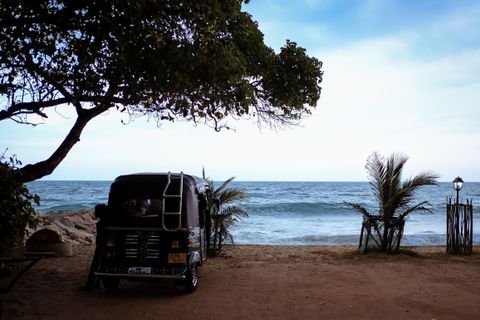
- Tangalle lagoon shorelines. Calm, sheltered water can allow plankton to gather.
- The coast near Kalametiya. A lagoon and sanctuary area close to Tangalle.
- Hikkaduwa Bay. Part of the marine national park, with visitor reports of glowing water, though the main beach is bright and busy.
- The Unawatuna shore. Also mentioned in guides as a location where it has been seen.
Outside the south coast, Kalpitiya in the northwest and Batticaloa Lagoon in the east are better known for glowing water.
When are your chances best?
Different sources say different things, so treat this as odds and not a calendar.
- Season: one guide says there is no strict season. Others suggest the dry season on each coast, which is roughly November to April on the south coast, and warmer months when plankton tend to boom.
- Moon: the most reliable tip. A new moon, when the sky is darkest, makes a faint glow far easier to see.
- Light: go where lights from restaurants and bars do not reach. The glow is relatively faint.
- Water: calm water in sheltered bays and lagoons can concentrate plankton. Some guides say high tide can bring more plankton close to shore.
Check a moon phase calendar before you plan a night out, and treat the rest as luck.
How to look for it safely
- Look from the shore. Walk along the waterline where the waves break gently, and let your eyes adjust to the dark for about 15 to 20 minutes before you decide there is nothing.
- Turn off all lights, including your phone screen, as far as you can.
- Do not swim at night. Rip currents and reefs make it dangerous. Read our beach safety guide.
- Go with other people, and tell someone where you are.
- Stay out of water that looks discoloured or smells strange.
- Do not expect your phone to capture it. A faint glow rarely shows in a normal photo. A tripod and long exposure may help.
A special note about Rekawa
Rekawa is a protected turtle nesting beach, and night visits there are run by the turtle project's guides. Do not wander onto the beach alone at night, and never use white light, which can disturb nesting turtles.
If you are already there for the turtle watch, a glow in the surf is a lovely bonus, but it is not a reason to go. Read our Rekawa guide for the rules and the best season.
What about night snorkelling in Mirissa?
A three-hour night snorkelling tour in Mirissa is listed on GetYourGuide, billed as a way to see nocturnal marine life. It is an interesting experience in its own right, but it is not a bioluminescence tour, and a glow is not part of what is being sold. Read our snorkelling guide and Mirissa guide for context.
How not to get scammed
- Be suspicious of the word "guaranteed." No one can control where plankton glow.
- Ask what is actually being sold. A boat ride, a kayak, a dinner or the glow itself.
- Do not pay in advance for a "bioluminescence tour" you cannot cancel.
- Check when the photos were taken. Old or foreign images are common on promotional pages.
- Compare with the moon. If a tour runs under a full moon, the odds are lower.
- Ask for a refund policy if there is no glow.
See our tourist traps guide for more.
Is it worth planning around?
No, not as a plan. It is a bonus.
If you are on the south coast at a new moon, on a clear night, near a dark, sheltered beach or lagoon, it is worth taking a short walk to look. If you are not, do not plan a trip around it.
Better reasons to be out at night include the Rekawa turtle watch, the Kalametiya lagoon in daylight and the Tangalle area.
A few things we would know before looking
Do not pay for a guaranteed glow.
No one can promise it.
Do not swim at night to chase it.
Look from the shore instead.
Do not go at full moon and expect a show.
New moon is much better.
Do not use white light near turtles.
At Rekawa, follow the project's rules.
Do not give up after five minutes.
Let your eyes adjust.
Frequently asked questions about bioluminescence in Sri Lanka
Can you see bioluminescence in Sri Lanka?
Yes, but it is unpredictable. It depends on plankton blooms, which vary from night to night.
Where can you see bioluminescence on the south coast?
Places such as Rekawa, the Tangalle lagoon shoreline, the coast near Kalametiya, Hikkaduwa Bay and the Unawatuna shore are mentioned in reports. None is guaranteed.
When is the best time to see it?
On a new moon, on a dark, calm night. Sources disagree on the season, and one says there is no strict season.
Are there bioluminescence tours in Sri Lanka?
Some operators advertise them. Nobody can truthfully guarantee a glow, so be cautious.
Is bioluminescence guaranteed at Rekawa?
No. Rekawa is known for turtles, and the glow there is a possible bonus.
Can I swim in glowing water?
We do not recommend swimming at night. Watch from the shore.
Will it show up in photos?
Often not, because the glow is faint. A tripod and long exposure can help.
What causes the glow?
Tiny plankton, mostly dinoflagellates, that give off blue-green light when disturbed.
Is the east coast better?
The east coast and Kalpitiya are better known for it, and one study found the strongest glow at Batticaloa in the dry months from May to September.
Final thoughts
Glowing seas are one of those things that sound easier than they are. They are real, they are beautiful and they do not run on a schedule.
Check the moon, find a dark stretch of shore, let your eyes adjust and keep your expectations modest. If it glows, you will remember it. If it does not, you still had a quiet night by the sea.
And if anyone offers to guarantee it, keep your money.